The World of Panem
Interpreting Society, Geography, and Characters of the Hunger Games
Clementine, Gold Mining and District 12
(NOTE: Spoiler Alert for The Ballad of Songbirds and Snakes).
Probably one of the more recognizable songs we enjoy in The Ballad of Songbirds and Snakes is one that Maude Ivory adores (and one that bugs Coriolanus to no end): “Oh My Darling, Clementine”. I didn’t know much about the song’s background and how it might relate to the book/series, so I naturally researched a few intriguing aspects for those interested. One connection between the song and District 12 makes immediate sense, that of mining. Even Suzanne Collins chose to provide two verses of the song in the actual text (p. 431 in my hard copy), which includes “Excavating for a mine, dwelt a miner, forty-niner”. Curiously, the song thus refers to the California Gold Rush, not coal mining in D-12, which may raise some eyebrows (including mine initially). The “forty-niner” reference gives it away, of course, meaning the Gold Rush of 1849. Those who participated in some way were known generally as “forty-niners”. Beyond this, here is more of the story…
The song is considered an important western “folk ballad,” which provides yet another rationale for Collins’ decision to include it. Generally, a ballad is a song that tells a story, and the ballad tradition heavily influenced the southern Appalachians and its music during the 1700s and 1800s with British immigrants (mainly English and Scots-Irish). But the lyrics of this ballad of Clementine is actually attributed to Percy Montrose around 1884 (though not entirely confirmed), and one author claims that it was an old Spanish ballad that Mexican miners made popular during the Gold Rush. One reputable web site with the song’s lyrics (see below) includes 8 verses of the song (not including the repeated chorus, which Maude Ivory enjoys shouting). So, there are at least two clear connections between the song and Hunger Games, those of “mining” and its “ballad” form. But wait, there’s more!
The typical focus of District 12 in the series is on coal. No problem, as the connections between coal, District 12, and the entire Collins series runs “deep” (pun intended). But what about gold mining and California? Well, I really don’t know if Collins considered this, but here we go: First, before there was coal mining in the “real” D-12 area of the Appalachians, there was gold! America’s first gold rush occurred not in California but within the southern Appalachians (D-12 area), particularly western North Carolina and north Georgia beginning in 1829. The rush came to a crashing end only in 1849 when California became the next great hope of striking it rich. So, there’s that–the gold-rush heritage of the D-12 region. But then, guess where a high percentage of the CA Gold Rush “forty-niners” migrated from in the first place? Yes, southern highlanders from North Carolina and Georgia, often accompanied by slaves, as they had been in the Appalachians as well. A good proportion of the CA forty-niners therefore were Appalachian transplants (either by choice or not).
With all this, I wonder if Collins intended some further symbolic connection between the gold-colored mockingjay pin, the gold bangles (Catching Fire), and of course her hair… In any case, there seems to be an underlying “gold” theme running through the series, and now it shows up again with Clementine. I am not sure yet what Collins had in mind, but it would surprise me if she was not aware of much of this history and connection.
One decent site for the full lyrics of Clementine can be found here.
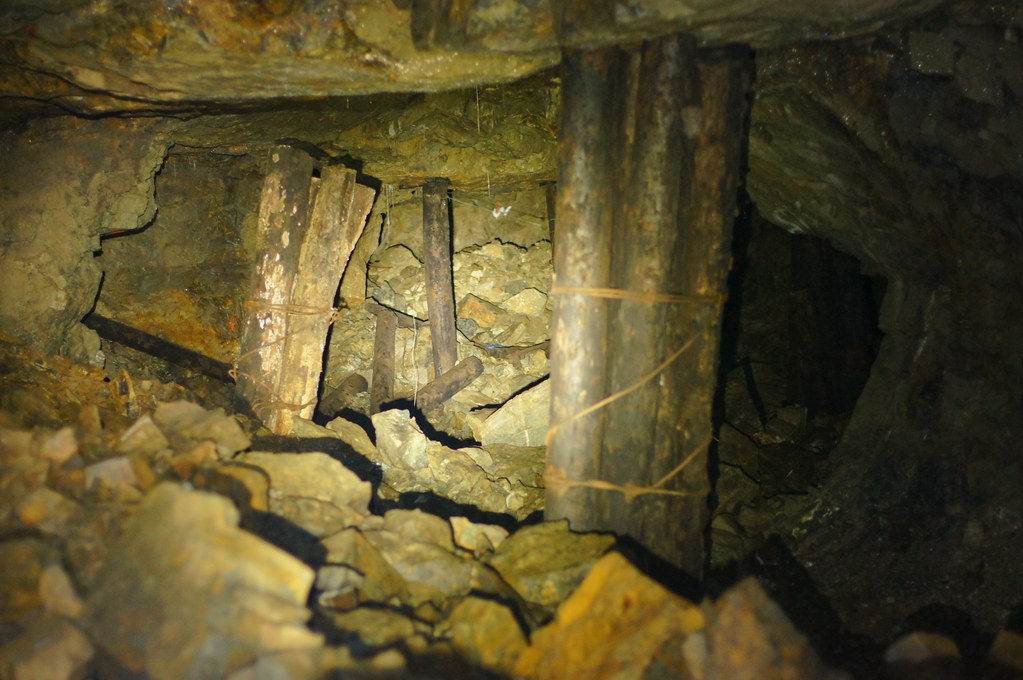
(Photo: Inside an old gold mine. Credit: tiflex2, Creative Commons)
Meet the Author
 Tom Paradis

This site inspired by a first-year seminar on the Hunger Games at Butler University.

 The World of Panem