The World of Panem
Interpreting Society, Geography, and Characters of the Hunger Games
Announcing a New Book on All Things “Ballad!”

I’m thrilled to announce my second book interpreting the Hunger Games saga, this one focused especially on the “Ballad” film and its connections to the prequel and original series! Titled Behind the Ballads: A Tribute to the People, Places, and Music of Songbirds and Snakes, this book takes readers on a tour of the numerous layers of meaning and backstories that underlie both the film and prequel. Now available on Amazon (with a sample) and numerous global retailers. Thank you for your consideration, and enjoy the show!
From the Back Cover: The 2023 premier of Hunger Games: The Ballad of Songbirds and Snakes introduced global audiences to the songster Lucy Gray Baird and her breathtaking performances. Based on Suzanne Collins’ prequel, the dystopian saga’s fifth film merges two unlikely worlds—namely Appalachia’s distinctive musical traditions with Germany’s postwar reconstruction era. These worlds collide in the Capitol’s Tenth Hunger Games and the dubious relationship between Lucy Gray and villain-to-be, Coriolanus Snow. This book explores the film as a period piece, including real-world geography, history, and meanings behind Appalachia’s District 12 and an emerging fascist Panem. We further delve into the principal filming locations, music production, casting decisions, character philosophies, comparisons with the novel, and of course the intricate backstories to those unforgettable ballads.
Year of Ballad! A Guide to Media Articles and News
Production, Filming, and Casting for Hunger Games: The Ballad of Songbirds and Snakes (Release Date: Nov. 17, 2023)
The following select collection of online sources provides a go-to place for “all things Ballad,” including production, filming locations, casting, and related information from a variety of news, media, and fan sites. This collection was screened and recommended by students within our First-Year Seminar Class, titled Unpacking the Hunger Games at Butler University, Indianapolis. We hope you find these sources enlightening about the highly anticipated feature film! (More will be added as available.)
Official Trailers and Reveals
- Official Trailer! (YouTube), released April 27, 2023
- Official Teaser Trailer (YouTube)
- Lionsgate Prequel Reveal (YouTube)
- Lionsgate Publicity Page, Including Reveal (Lionsgate)
Overviews and Collections
- IMDb Movie Information Page. Scroll down for primary cast members, links to additional cast information and backgrounds, production information, and much more.
- The Hunger Games Wiki: The Ballad of Songbirds and Snakes (film). Includes a wide range of information, organized through its Table of Contents, including synopsis, plot, development, cast, gallery, and more.
- Dynatic Films: Video Overview of the Prequel Story and Film (YouTube, 9 min). A concise and informed introduction to the Ballad film storyline, cast members, and what to expect. Includes an overview of the original Hunger Games trilogy at the beginning.
- Panem Propaganda: The Ballad Prequel. An impressive collection of articles, photo galleries, and discussions focused on the filming and production of the Ballad in Europe. See the “Latest News” articles on the left for numerous specialized topics.
ON SET: Filming Locations and Images
- A Behind-The-Scenes Tour of The Ballad of Songbirds and Snakes Set (YouTube, Rachel Zegler TikTok video)
- Behind-The-Scenes Set Photos of the Hunger Games Prequel (Panem Propaganda, Oct 10, 2022)
- Propaganda Posters, The Hanging Tree, Peacekeeper Vehicles, Extras, and More! Inside The Hunger Games [Prequel] Set in Germany and Poland (Panem Propaganda, Sept 2, 2022)
- The Hunger Games [Prequel] First-look Photos Show Child Actors Running Past Dead Bodies on a Battlefield in Berlin (Daily Mail, Oct 25, 2022)
- Hunger Games: Extras Wanted for the Prequel Shoot (News in Germany, May 2022)
News Releases and Articles
(Most recent at the top)
- Rachel Zegler Wraps Filming on Hunger Games Prequel, The Ballad of Songbirds and Snakes (Collider, Nov 5, 2022)
- Everything We Know So Far about Hunger Games Prequel, The Ballad of Songbirds and Snakes (Entertainment, Oct 23, 2022)
- The Hunger Games Prequel Cast: Every Character Cast, So Far (Nerdist, Sept 16, 2022)
- Hunger Games: The Ballad of Songbirds & Snakes Rounds Out Cast with Fionnula Flanagan, 10 Others (Deadline, Sept 16, 2022)
- Who’s Who in The Hunger Games: The Ballad of Songbirds and Snakes’ Movie Cast (The Hollywood Reporter, Sept 3, 2022)
- The Hunger Games:The Ballad of Songbirds and Snakes: Exclusive First Look (Vanity Fair, Aug 16, 2022)
- What We Know about the Upcoming Hunger Games Prequel Movie (Insider, Aug 16, 2022)
- West Side Story breakout Rachel Zegler to star in Hunger Games prequel. (Entertainment, May 31, 2022)
Film Analysis and Speculation
- Ballad of Songbirds & Snakes Movie Will Have to Change the Book (Sorry) (ScreenRant, Aug 7, 2022)
- Oh, The Hunger Games Prequel’s First Look is Not A Good Start (ScreenRant, Aug 17, 2022)
Recent Published Books Interpreting The Ballad:
A Place Called District 12: Appalachian Geography and Music in the Hunger Games (by Thomas Paradis, McFarland & Co., 2022)
Songbirds, Snakes & Sacrifice: Collins’ Prequel References and Philosophies Explained (by Valerie E. Frankel, LitCrit Press, 2020)

Visiting the “Seam” at Henry River Mill Village
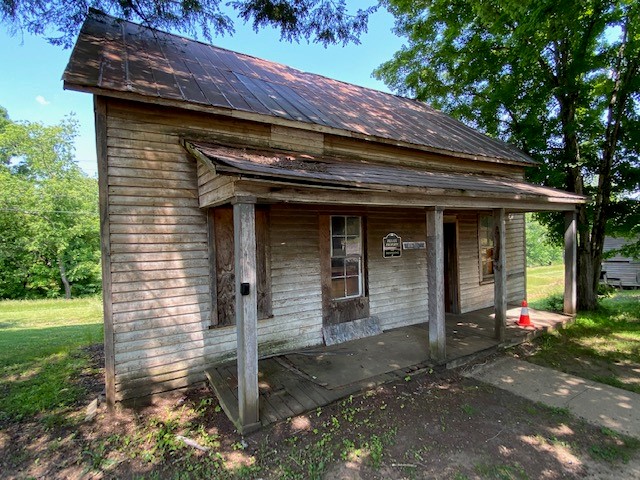
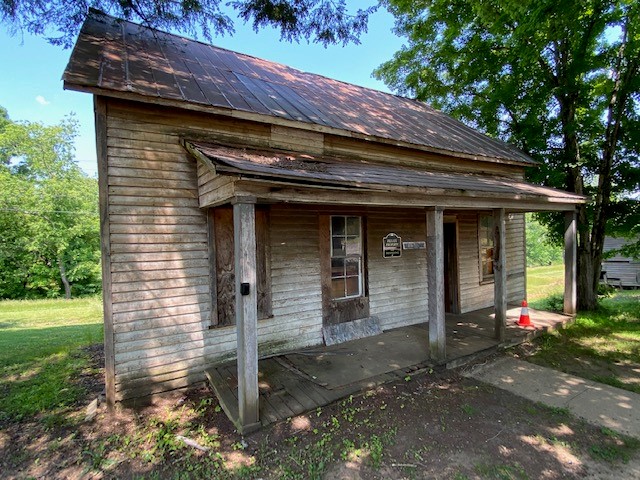
It would be a shame to find oneself only an hour away from a famous Hunger Games filming site without paying a visit to this hallowed ground. Some friends and I thus took an opportunity to check out the current scene on a beautiful May afternoon of 2021.
The real history of Henry River Mill Village began around 1905 with the establishment of a textile mill by the Henry River Manufacturing Company. The nearest town of Hildebran is located only one mile north of the mill and is just off of Interstate 40 in western North Carolina. As of 2019 the remaining structures at the site included the original company store building and 20 nearly identical wood-frame homes of former textile workers–many of them in serious disrepair. The original village had included 35 houses, and the mill itself had been closed in 1970 before being consumed by fire in 1977. Since then the village’s boarding house has also been destroyed, which once sat just to the left of the company store. Fans will recognize the village in various scenes within “The Hunger Games” film to represent Katniss’ own coal-patch town, the Seam. The old company store, for instance, served as the Mellark bakery, and one of the dilapidated houses featured as the Everdeen residence (interior and exterior pictured below).
What may be less familiar is the site’s more recent developments well after the filming. Following the Village’s abandonment since the 1990s, the place is now being transformed as a visitor attraction. The entire village property was purchased in 2017 by Calvin Reyes and his parents. In the spirit of transforming historic structures to more contemporary purposes—defined as adaptive re-use—Reyes has restored one of the houses and has converted the entire village property into a visitor destination. Due in part to its fame as a popular filming location, the outdoor site is also monitored more thoroughly with video surveillance. The previous owner had less control over trespassing and the vandalism that occasionally came with it. Likewise, activities for visitors are now more organized and prescribed in the form of scheduled tours.
Not knowing what to expect upon arrival, we found a simple metal shipping container in the small parking lot next to the company store, and we wondered where everybody was. After milling around a bit (pun intended), an enthusiastic fellow emerged from the trailer to greet us, confirming that he would be our tour guide of the site as well (I had purchased tickets online, if I recall). With no one else around, the three of us enjoyed our own private tour and some wonderful tidbits about both the filming and the site’s history. Perhaps the most explosive (pun intended) bit of information was his revelation that the filming crew blew up one of the remaining derelict houses to film the flashback scene of the mine explosion. Upon later browsing in the budding gift shop, he further revealed the true control the company held over its employees and families, right down to the separate currency the company distributed for use in its own company store (pictured below). Not to neglect, of course, that true moment of fandom when you stand in the very Everdeen residence where Katniss, Prim, and their Mother kicked off the movie.
Fans will also recall the scene by the old dam within “The Hunger Games” film, which Katniss scoots across during her early hunting foray. This scene was filmed here as well. After concluding our guided tour, we ventured downhill to see if we had visual access to the reservoir and dam. No luck. Any access was completely overgrown by thick vegetation, and we risked venturing onto private property. Thus, we did not succeed with the “dam tour” on this visit. Our guide explained that the filming crew had gained permission from the owners. But no matter, we enjoyed complete freedom to stroll around the remainder of the village after our tour. We even discovered that the property is now popular for weddings, with an old church window serving as a makeshift altar in the village’s own meadow (photo below).
Although certainly not a realistic coal-town landscape as portrayed within the saga by author Suzanne Collins, I believe the decision to portray the Seam here in Henry River was as good as any, especially given the educational opportunities provided by an actual company town. With no running water and scant electricity even during the mill’s heyday, this provided for a much more realistic filming location than the back lot of a Hollywood studio.
Here’s the web site for Henry River Mill Village.




Announcing a New Book on the Hunger Games Saga (Including the Prequel)
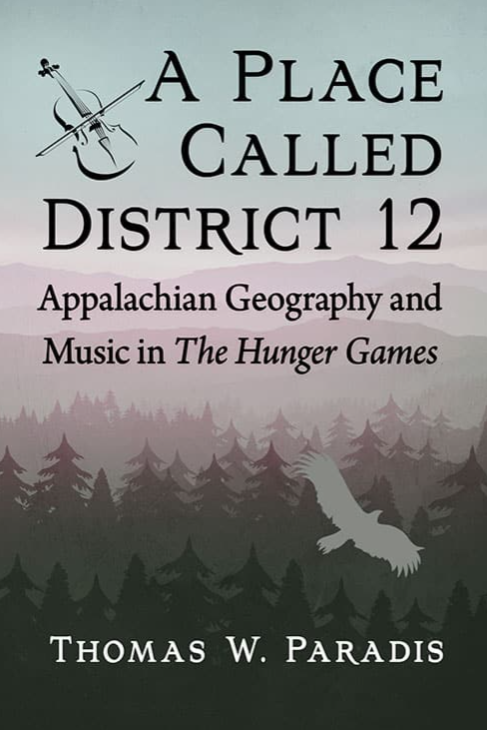
A Place Called District 12: Appalachian Geography and Music in the Hunger Games, by Thomas Paradis

For highlights and background, please see an Interview with author Tom Paradis about his new book, A Place Called District 12. Provided by Religious Studies Professor, James McGrath, Butler University (June 2022)
Overview of the Book (Click image or title above for McFarland Release Announcement)
In creating her post-apocalyptic world of the Hunger Games, author Suzanne Collins pulls from a wide array of real-world history and geography lurking just beneath her captivating story line. Now within her recent prequel, The Ballad of Songbirds and Snakes, Collins pulls us ever deeper into Appalachia’s extraordinary cultural diversity and its storied musical traditions. Here geographer Thomas W. Paradis invites you on his own tour of human geography, history, and culture that collectively provide the foundation for the saga’s novels and films.
Written for fans, educators, and students of any age, A Place Called District 12 provides insightful background on scenes from the novels and films from the original series and recent prequel. Some highlights include the following topics:
- A geographical revision of District 12’s location within the Appalachian Mountains.
- Historical geography, architecture, and urban design of District 12, the Capitol, the Corso, the president’s mansion, the Victors Village, and the Cornucopias, including segments about major filming locations.
- The historical development of Appalachian balladry, mountain string bands, early country music, and bluegrass, all of which are represented throughout the saga and District 12’s own bluegrass band, the Covey.
- Interpretations and meanings behind numerous key songs within the saga, including the “Valley Song,” “The Hanging Tree,” and “Keep on the Sunny Side”.
- The social history and working conditions of coal-mining communities on which Katniss’ home town is largely inspired.
- Katniss’ attachment to home, and how her personal identity is shaped by her multiple definitions of the home place.
Table of Contents
Acknowledgments
Preface
Introduction
PART 1: Setting the Geographic Stage
- District 12 of Central Appalachia
- Places and Spaces of District 12
- Katniss at Home
- An Appalachian Melting Pot
- Small Town in Panem
- Portraying the Seam
- Designing a Capital City
- Panem as World System
PART 2: The Music of District 12
- The Ballads of Appalachia
- Mountain String Bands
- District 12 Goes Country
- Bluegrass and the Covey
- Building the Bluegrass Sound
- A National Audience
- Maude Ivory the Songbird
Chapter Notes
Bibliography
Index

The Case for Maude Ivory as a Future Grandmother
(SPOILER ALERT for The Ballad of Songbirds and Snakes)
Perhaps one of the more light-hearted debates among fans has been whether we have indeed met one of Katniss’ ancestors within the prequel. After reading a variety of perspectives on this issue, I began to notice potential clues myself. Not all of Collins’ possible clues are found in her recent prequel, however, but they also spill over to the original series. Suggestions regarding who is or is not related to Katniss have been wide ranging. In my limited perusal of fan sights, it seems the number one candidate for a Katniss ancestor is Lucy Gray Baird herself. A close second might be Maude Ivory, followed then by a litany of other possibilities—any of which are potentially valid until Suzanne Collins decides to just tell us in some way what she was thinking. Some believe there is no family connection at all. Like Lucy Gray in the woods—and the ballad for which she is named—the answer may be blowing in the wind.
That said, in this post I provide a collection of potential clues, or breadcrumbs, that appear to indicate a family connection between Maude Ivory and Katniss. When taken separately, they may each be meaningless. But when considered together, it is difficult to dismiss their consistent message. Let’s take a look at some of my favorite “breadcrumbs”.
Confirming a Musical Connection
Starting from a baseline of what Collins has already admitted, it is vital to begin with this excerpt taken from a recent interview between the author and a Vice President of Scholastic, David Levithan, released on the same day as the prequel. During this interview, Collins introduces us to her new character of Lucy Gray Baird:
Focusing on the 10th Hunger Games also gave me the opportunity to tell Lucy Gray’s story. In the first chapter of The Hunger Games, I make reference to a fourth District 12 victor. Katniss doesn’t seem to know anything about the person worth mentioning. While her story isn’t well-known, Lucy Gray lives on in a significant way through her music, helping to bring down Snow in the trilogy. Imagine his reaction when Katniss starts singing “Deep in the Meadow” to Rue in the arena. Beyond that, Lucy Gray’s legacy is that she introduced entertainment to the Hunger Games. (Scholastic Releases New Interview)
In my mind there is a treasure-trove of information packed in here. Collins admits to a planned musical connection between Lucy Gray and Katniss, though she stops just short of suggesting a family relationship. She even imagines out loud what Snow must be thinking when he hears Katniss singing the very songs he had heard decades earlier. Further, Collins all but puts to rest the popular notion that Lucy Gray is a direct ancestor of Katniss, claiming only that Lucy Gray “lives on in a significant way through her music”. This seems to imply that Lucy Gray either did not survive long after the prequel, or she did not remain long in District 12 to raise a family herself. Another post of mine provides the perspective that Lucy Gray likely survived her incident with Coriolanus in the woods, despite the Wordsworth poem serving as a clear metaphor (and foreshadowing) for her own life. Still, that does not mean that she necessarily hung out in District 12 for a long time, let alone raised a family.
This supports the belief of a portion of readers that Lucy Gray could not be related to Katniss or her father because Katniss would have naturally mentioned his grandmother or grandparents within all of her reminiscing about family throughout the original series. She seems to know nothing about her grandparents, about where her father learned all that music or why he knew so much about the woods and the lake. And, if that weren’t enough, why had Katniss never heard any details about how her grandmother had won the tenth annual Games? Some of these points provide relevant mysteries even if we believe Maude Ivory becomes the carrier of this knowledge and passes it down to Katniss’ father—a mystery I admittedly have yet to reconcile. However, let’s look at the following clues that seem to indicate a Maude Ivory connection. There are many more than this, which other readers can help to uncover. In the interest of keeping this post relatively brief, here are some of my favorites.
Doing the Math: Maude Ivory as Grandmother
In terms of “doing the math,” it does make sense that Maude Ivory could realistically be Katniss’ paternal grandmother. First, Collins makes a point to inform readers of Maude’s age. Near the beginning of the Covey’s first performance at the Hob, Coriolanus observes Maude Ivory and estimates that she “couldn’t be more than eight or nine” (p. 361). In this way, Collins is likely instructing us that Maude Ivory is, well, eight or nine. Why else would she mention this in her narrative?
Beyond such speculation, it allows us to calculate the timeline of possible future generations and births. As just one of numerous possibilities, let’s assume that Maude is nine years old during the tenth games. Then she could be around 29 when giving birth to Katniss’ father (the year of the 30th annual games). This would make Katniss’ father a reasonable 28 years old when his own wife gives birth to Katniss (year of the 58th games). Katniss would then be the correct 16 years old when she is reaped for the 74th games. Thus, both Maude and her son—Katniss’ father—would be in their late 20s when they start, or continue, their own families. Even considering that average lifespans are likely shorter within the Seam, due largely to impoverished living conditions and mining hazards, this generational timeline would be realistic for Collins’ contemporary readership.
Mockingjays, Singing, and the Woods
Despite this oddity, it is difficult to simply ignore numerous clues that may point to connections between Maude Ivory, Katniss, and her father. Those connections largely involve their shared knowledge of Appalachian music, their similar singing styles and musical abilities, and their collective familiarity with the woods and the lake. Let’s focus first on Katniss’ father and his own musical legacy that was variously passed down to his daughters. Here is Katniss expounding upon her father’s musical skill and his love for singing—and for mockingjays in particular:
My father was particularly fond of mockingjays. When we went hunting, he would whistle or sing complicated songs to them and, after a polite pause, they’d always sing back. Not everyone is treated with such respect. But whenever my father sang, all the birds in the area would fall silent and listen. His voice was that beautiful, high and clear and so filled with life it made you want to laugh and cry at the same time. I could never bring myself to continue the practice after he was gone. (THG, Ch. 3)
Katniss’ father clearly commanded the attention of mockingjays, apparently more successfully than most people. One clue here is that the birds would “fall silent and listen” because his voice was “that beautiful”. Members of the Covey enjoyed similar influence over the melodic birds, singing along with them during their hikes in the woods.
Memorizing Music
Another song replete with generational connections is none other than “The Hanging Tree”. Just before Katniss sings it for the “propo team” in Mockingjay, she admits to remembering its “every word” despite not having sung it since she was around seven years old. Maude Ivory had similarly learned the ballad at a young age, claiming it had “real authority”. And she was most likely the one who quietly passed it on to others. This is due to the song’s having been banned in District 12, after which Lucy Gray promised not to sing it. Somehow, then, Katniss’ father learns it, thus allowing Katniss to sing it much later in Mockingjay. In part, Katniss reflects back on the time she practically knew it as a household song:
In the stillness I remember the scene. I was home from a day in the woods with my father. Sitting on the floor with Prim, who was just a toddler, singing “The Hanging Tree.” Making us necklaces out of scraps of old rope like it said in the song, not knowing the real meaning of the words. The tune was simple and easy to harmonize to, though, and back then I could memorize almost anything set to music after a round or two. (MJ, Ch. 9)
This passage provides perhaps the most significant reference to a potential connection between Maude Ivory and Katniss. Here Katniss admits that she could “memorize almost anything set to music” after only a little practice. In the more recent prequel, Lucy Gray explains why she chose to sing her own ballad as a way to communicate with the Covey back in District 12 (Note: “P” = new paragraph):
“The song, it was payback of a kind. Most people won’t know that, but the Covey will get the message, loud and clear. And they’re all I really care about.” (P) “Just on one hearing?” asked Coriolanus. “It went by pretty fast.” (P) “One hearing’s all my cousin Maude Ivory needs. That child never forgets anything with a tune,” said Lucy Gray. (BSS p.173)
In this case, Collins uses Coriolanus to lead into a discussion about Maude Ivory, by having him express doubt that the Covey would pick up a song on television with only “one hearing”. In response, Lucy Gray praises Maude Ivory’s memory by claiming that the child “never forgets anything with a tune”. Why would Collins insert this information if it wasn’t coded for some larger meaning? It is highly improbable that both Maude Ivory and Katniss Everdeen coincidentally enjoy the same ability, and at roughly the same young age. This does not imply, of course, that the special music skill they share is passed down genetically. Rather, this may be another literary approach to suggest a family connection between them.
To conclude here for now, this question of a potential family connection is just one “loose end” within the prequel that makes me believe more books are on the way. I invite readers to see my earlier post about Maude Ivory and Butter where I provide a litany of loose ends that may indicate that Collins intends to continue writing beyond the prequel (or at least we can hope that the odds are indeed in our favor). Until that happens of course, all of this is little more than fun speculation. So, in the meantime, fun we will have!
The Butter Enigma: Why Future Books May Be Coming

(NOTE: Spoiler Alert for The Ballad of Songbirds and Snakes)
(Feature Image: An old crank-type butter churn. Source: Creative Commons, the Mallala Museum.)
There are admittedly some compelling arguments as to why Suzanne Collins’ Prequel may be her last in the series. Indicators include the unique formatting and voice of this story compared to the original series, its overall length, and the way she seems to close out the story quickly with an Epilogue that some feel is rushed. It is certainly reasonable for someone to conclude, “well, that about wraps it up for Snow”. Others wisely point to Collins’ own stated purpose for writing the Prequel, as she is quoted within a Scholastic News Room piece: “With this book, I wanted to explore the state of nature, who we are, and what we perceive is required for our survival. The reconstruction period ten years after the war, commonly referred to as the Dark Days—as the country of Panem struggles back to its feet—provides fertile ground for characters to grapple with these questions and thereby define their views of humanity.” Having presumably accomplished her education goal with the book, some say, there may be little interest on her part—or sense of obligation— to continue the story beyond the Prequel. If this is indeed the case, then we might say to Collins and her world of Panem—in the timeless words of author Douglas Adams, “So long, and thanks for all the fish”. Or, thanks for the intriguing and thought-provoking stories, in any case.
Despite all of this, there is equally—if not more—compelling reason to suggest that the Prequel is likely just the beginning of another three-part series. Given my own, nearly-unwavering belief this is the case, the remainder of this post will attempt to make that argument. For purposes here, my entire argument is based solely on canon, the actual narrative as Collins has written it. In my mind, there are simply too many loose ends, possible clues, and strategic dialogue segments to easily suggest the series has come to a sudden crash with the Prequel. Let’s explore some of these aspects that I have identified. There are likely even more that my own literal mind has not absorbed or recognized yet. These points below are in no particular order of importance or sequence within the narrative. Although the first one is definitely in my “top five” list.
The Butter Enigma: What’s up with Maude Ivory’s fascination with butter? Readers spend quite some time at the Covey household enjoying a rather curious conversation around Maude Ivory’s love of butter, and none of this seems to connect in obvious ways to the rest of the story. In short, it is not necessary, and Collins could have provided any other conversational direction here. As Lucy Gray explains: “We promised Maude Ivory we’d try. She’s crazy for butter. Tam Amber fashioned the churn for her birthday. Guess we’ll see,” said Lucy Gray (BSS 394). It would not be unreasonable to interpret this conversation as a “sign post,” or foreshadowing, for additional connections and meanings to appear in a future book. If nothing else, the conversation may indeed point to yet another commonality that Maude Ivory seems to have with the future Katniss Everdeen: that of nightmares and thus possible symptoms of PTSD. It is likely no accident that Lucy Gray explains to Coriolanus that the butter churning exercise gives Maude Ivory something constructive to do. As she states, “But it’ll be worth it if it works. Maude Ivory doesn’t sleep well since they took me away. Seems fine during the day, then wakes up screaming at night,” confided Lucy Gray. “Trying to get some happy in her head.” (BSS 394).
Perhaps the connection between Maude Ivory and butter churning is solely meant to set up this latter conversation about her nightmares. In which case Suzanne Collins is almost certainly pointing to more similarities between Maude Ivory and Katniss. The “screaming at night” phrase simply “screams” a major connection between the two characters. Regardless of where this “butter enigma” (as I call it) actually leads, is this really the end of the story? It is difficult to believe that Collins would include such dialogue without any intention to foreshadow or provide future hints of character connections.
One final thought is difficult to dismiss outright—that of a cat named Buttercup. This seems to be the only tangible connection with butter between the original series and the Prequel. Should it turn out (as I and others suspect) that Maude Ivory is Katniss’ grandmother, then she may have passed down her love of butter to Katniss’ parents, after which Prim indirectly picks it up (or after her father’s death). Although Katniss explains on page one of The Hunger Games that Prim named him Buttercup after the “bright flower,” it is possible to imagine a connection here. Beyond that is the more direct comparison between Maude Ivory’s goat and that of Prim—first, the undeniable fact that they both have one. In a larger context, both families are attempting to survive on some form of subsistence agriculture and farm life, producing for their own consumption. This ties even more broadly into the traditional, small-farm agricultural traditions of rural Appalachia (I will stop for now with this line of discussion.)
In the interest of brevity for this post, let’s just touch on a few additional “loose ends” that seem to be pointing to future books:
- How and when does Coriolanus learn about District 13? None of that has been discussed yet, but the district is the primary reason why his family lost its fortune. They presumed that D-13 had been eliminated, and their fortune along with it. Wouldn’t he be upset if he knew the leadership of Panem had jilted his family and their fortune by not telling them the truth?
- Just who bombed the Capitol stadium? There is a good case to make that the crazy Dr. Gaul was responsible for the bombings and merely blamed it on the rebels. It was likely her first attempt to make the Games more intriguing. This is only speculation, but the mystery about the bombing in the arena remains hanging in the air.
- Perhaps most asked by readers: What happens to Tigris, and her relationship with Coriolanus? When do they experience their presumed “falling out,” and for what reasons and circumstances?
- Sejanus’ bread ritual in the Arena. His mother says it’s what they do in District 2, but we don’t learn much more than this. (Perhaps this one could be closed off here without further notice, though it seems to play a serious role in the culture of District 2 and the lives of the Plinths).
- At what point does Panem go on lockdown? There is still a lot of free movement and capitalist investment between and among the districts and the Capitol. In one respect, the Panem of the Prequel is a much more integrated, dynamic nation than what we see in the original series. The Covey may have been rounded up during the war, but people can still move around the nation, which this geographer found intriguing. Mail still moves nationally (likely delivered by train as in our own nation’s past), and the country acts more realistic with regular connections and communication. At some point the leadership clamps down on national freedom of movement and communications, but when and why? This is likely coming in a future book.
- Heavensbee Hall: This is an obvious connection to Plutarch Heavensbee, but there is no further explanation in the Prequel. Why would Collins include this tip if there was not more coming? The same could be said for Livia Cardew and her connection with Plutarch’s future assistant. Livia is prone to gloating, as we discover, and we further learn that her mother runs the largest bank in the Capitol. But the story and connections end here with her last name. What’s her future story?
- The Katniss plant: Clerk Carmine pulls up the Katniss roots by the lake and is praised by Lucy Gray for doing so. This incident could spawn a whole separate discussion over the likelihood that some serious foreshadowing is going on here (along with the entire existence of the Covey and their familiarity with the lake). Is it not unreasonable to suspect that more of this story will appear in future books?
- Why the attention on the Covey? And the specific, likely calculated dialogue written to teach readers about their physical appearances and family relations. This all likely points to a future continuation of their story and their ties to the home of Katniss.
- Arlo Chance and Lil. What was his rationale for blowing up the mine—allegedly— without any chance of starting another rebellion? And who is Lil, and why does she specifically have “olive skin and long black hair” like Katniss? This is not likely included merely to describe yet another resident of the Seam. A larger meaning and connection is likely forthcoming in a future book or books.
- Building a herd: “Only one up when I left was Tam Amber. I told him I was going to find out about a goat. We’ve been talking about building a herd. Sell the milk as a sideline,” she said. Sounds like some subsistence farming experience building here. How might this connect to Katniss’ parents and their own experience with raising animals, hunting, and gathering plants?
- Last but not Least: What happens to the Covey? Why does Collins include the dialogue about their travels north and east (but not as far west as the Capitol)? And why did Collins insert a comment regarding the Covey’s strange mannerisms and physical appearances (Seam or otherwise)? Why bother mentioning any of this if more of their story isn’t coming? Consider, if you will, the following excerpt as just one example: “Thank you kindly. I’ll sing you a special song tonight!” . . . “I came with no other hope,” said Coriolanus. It was funny how the society talk of the Capitol seemed natural with the Covey. (BSS Ch. 26) This exchange could be interpreted as a signpost hinting that future information about the Covey is forthcoming down the road (or, in the least, this is what some of us might hope).
This list could likely be expanded through the keen observations of others. With all of this left “blowing in the wind” (perhaps like Lucy Gray), it is seriously difficult to believe that future books are not on the way.
The Valley Song as Country Music Exemplar

(NOTE: Spoiler Alert for the Ballad of Songbirds and Snakes.)
Readers of The Hunger Games learn about “the valley song” during Peeta’s recollection of his early adoration for Katniss: “So that day, in music assembly, the teacher asked who knew the valley song. Your hand shot right up in the air. She stood you up on a stool and had you sing it for us. And I swear, every bird outside the windows fell silent” (THG Ch.22). Early readers of the recent Prequel have already pointed out the likely connection between the “valley song” and the one sung by Lucy Gray while caged with the other children at the Capitol Zoo. Peeta’s quote further indicates that Katniss had enjoyed some musical upbringing before she suffered the traumatic loss of her father. In any case, it makes sense that Collins provides some contextual background of this mysterious song in her recent Prequel, much as she did with The Hanging Tree. For my part, when I first encountered Lucy Gray’s first line, “Down in the valley, valley so low,” I recall immediately making the connection and stating aloud: “It’s the valley song!” with a subtle smile. I suspect many others did as well. While Suzanne Collins has not confirmed this is the case (to my knowledge), it is a safe bet right now that these songs are one and the same (I would go with a 99 percent level of confidence, for statistics fans). Moving along from here, the remainder of this post aims to provide some insights into the historical origins of the “valley song”. In this case, neither Lucy Gray (as a character) nor Suzanne Collins wrote the lyrics from scratch, but adapted an older American folk song for their own purposes. This is a trend for numerous songs and their stylistic origins throughout the Prequel.
The song that inspires Lucy Gray’s “valley song,” and likely that of Katniss as well, is titled Down in the Valley, itself rooted in earlier folk song traditions. Like typical folk music handed down through the generations, the lyrics of this one have been altered many times with countless versions. One theory holds that the origin of the song can be traced to a prisoner in the Raleigh, North Carolina State Prison, in the form of a letter written to a girl in Alabama (Tate & Tate 2004). But there is an alternate, if similar claim that the song was written (or perhaps modified) by early country music star and guitarist Jimmie Tarlton. According to the Wikipedia entry (with no reference, unfortunately), Tarlton takes credit for writing the song in 1925 as a prisoner in the Birmingham, Alabama city jailhouse, purportedly for illegal moonshining. This is certainly not out of the realm of possibility for that time and region. Perhaps this story is in a memoir somewhere that I have yet to discover.
Regardless of who actually wrote the song and in what prison, it is clear that the first popular, commercial version was recorded in 1927 by Jimmie Tarlton and his partner Tom Darby for Columbia Records. Sometimes the song is known by an alternate name, “Birmingham Jail”. Even Tarlton and Darby would change out various words and lines, such as singing “down in the levee” instead of “down in the valley”. In another version by Lead Belly in the 1930s, “Birmingham jail” is replaced with “Shreveport jail”. It’s not too crazy to assume that singers could substitute place names on a whim to rev up local sentiments from the home crowd. As for Lucy Gray, her alteration of some wording to suit her predicament in the Capitol fits into the ongoing practice of substituting certain lyrics for others as the situation calls for.
As for early country musician Jimmie Tarlton, his upbringing in a musical household was rather common for rural families of the South and within the Appalachians in particular. Raised in rural South Carolina, his father played a banjo and his mother was a singer. By age six, Jimmie was already playing the banjo and French harp, later taking up the guitar. He was already performing in the Northeast and the Texas-Oklahoma region by his teens, and eventually made his way to California. It was in 1927 when he began his partnership with Tom Darby, the same year they recorded “Down in the Valley”.
Of course, musicians are often networked in various ways, and Tarlton found himself collaborating at some point with Jimmie Rodgers. Along with the Carter family, Rodgers would be credited as the first true country music star during the 1920s. Readers of my previous blog post about the Covey and bluegrass music might recall that Jimmie Rodgers played a large role in inspiring the “father of bluegrass,” Bill Monroe, and his own development of the “high, lonesome sound”. Bill Monroe and his Blue Grass Boys seem to have inspired the music style performed by the Covey, that of a traditional bluegrass band.
As for “Down in the Valley,” the song took on a life of its own after Tarlton and Darby made it commercially famous as a country music exemplar. While the basic lyrics and theme remained recognizable, the song was occasionally altered over time for this or that purpose. Numerous music stars have produced their own versions and recordings, not the least being The Andrews Sisters (1944), Bing Crosby (1961), Connie Francis (1961), and Jerry Garcia and David Grisman on their more recent 1996 album, Shady Grove. The song has also appeared in various Hollywood films and television shows, including the film Stir Crazy, and the Academy Award-winning film, Bound for Glory, among numerous other examples from over the years. Perhaps somewhat amusingly, the song further shows up in an episode (Dark Page) of Star Trek: The Next Generation, when a projection of Deanna Troi’s father sings the song. Somewhat eerily reminiscent of the Hunger Games trilogy, Deanna Troi mentions that as a baby she could never fall asleep without hearing the soothing tune. Perhaps it was a version of this song that somehow made it to the Capitol for Coriolanus to hear as a baby? At least the “roses are red and violets are blue” theme appears in both Lucy Gray’s and Coriolanus’s version of the song (admittedly not because of Star Trek. But the coincident use of the song here as a lullaby as with other Hunger Games songs did not go unnoticed here.)
One of the closest and most common renditions of the song was made popular by another famed country music star, Eddy Arnold, who enjoyed a career that spanned six decades and represented the so-called “Nashville Sound” of the late 1950s. He sold some 85 million records (wow!) and became a member of the Grand Ole Opry beginning in 1943 (only four years following the arrival of the “Father of bluegrass” himself, Bill Monroe). Here is a link to Arnold’s lyrics to Down in the Valley, with remarkable similarity to the Lucy Gray version of “the valley song”. Only a few words were changed to make it more appropriate for the world of Panem.
I’m sure others can dig further (mining pun intended) into the meanings or background of this iconic Hunger Games piece. Hopefully the tidbits provided above are a place to start, with some contextual background as to how the “valley song” has remained in America’s collective consciousness. Given its role within the early country music genre, it would be perfectly reasonable for Suzanne Collins to choose it as an exemplar of the genre within her ongoing series. Along with songs like “Clementine” and “Keep on the Sunny Side,” the “valley song” only contributes to our Collins-inspired tour of first-generation country music in the early twentieth century. Beyond all this, the song appears to serve as one of numerous clues pointing to the possible ancestry of one Katniss Everdeen—a subject for another post and plenty of further speculation.
Here is one rendition of the song on YouTube, by Roy Clark, 1979
(Featured Post Image: “Grand Ole Opry Fan” by afagen. Creative Commons)
References
Artist Biography: Jimmie Tarlton
“Down in the Valley“: Wikipedia
Lyrics to “Down in the Valley” and Eddie Arnold Biography
Tate, Ken, and Janice Tate (2004). Favorite Songs of the Good Old Days. DRG Wholesale. p. 29
Tam Amber’s “Teardrop” Mandolin
(NOTE: Spoiler Alert for The Ballad of Songbirds and Snakes.)
Some readers may be surprised to see a rather obscure string instrument show up in The Ballad of Songbirds and Snakes—namely Tam Amber’s mandolin. As the narrator describes, he “proved something of a standout on his mandolin, riveting the crowd with his lightning-fast fingering while his face remained expressionless and distant” (Ch. 23). One may ask quite logically, “Just what exactly is a mandolin, and why is it showing up in the Hunger Games stories?” In a previous post titled The Covey’s Mountain Music, I provided some background to the “Why mandolin?” question. In brief, the mandolin rose to prominence as one of the standard instruments of bluegrass bands by the 1940’s. The “Father of bluegrass music” himself, Bill Monroe, had specialized in the smallish string instrument and elevated it to a lead performance role. With the Covey, it is clear from my own research that Suzanne Collins went “full bluegrass” with their stage shows at the Hob and at the Peacekeepers’ base.
Beyond that, I’ll use this space here to provide a bit of background on the mandolin and help us all understand what enabled it to end up in the hands of Tam Amber—historically speaking, at least.
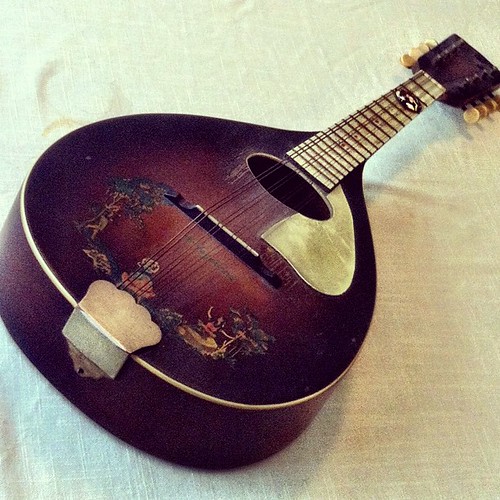
Like other musical instruments through the ages, the mandolin comes in a variety of shapes and sizes. Collins provides on important clue as to the variety featured by Tam Amber. As the “tall, rawboned young man” was introduced by Maude Ivory, Tam Amber emerged from behind the curtain “strumming an instrument similar to a guitar but with a body more like a teardrop”. This is just one of three rather common shapes of the modern mandolin. The “teardrop” version of Covey fame is known as an A-style mandolin (photo below, right side), which is still commonly played by amateurs and professionals alike. This is a popular “beginner” mandolin for learners, especially due to its relative affordability.

More common for traditional bluegrass musicians is another form, known simply as the F-style mandolin (photo, left side). Professional models can run in the thousands of dollars and tend to be favored by serious musicians. The main identifying feature of the F-style mandolin is the wooden scroll shape on the top, which is entirely aesthetic and has no musical contribution from what I could discern. What both have in common is their flat-backed shape, which is favored by folk and bluegrass musicians in America and the British Isles. Also in common is their unique pairing of strings—eight strings, four pairs—with two strings each for the notes of G, D, A, and E. The strings and music for the mandolin happen to be the same for the violin or fiddle—of the type played by Clerk Carmine.

A third style is the “bowl-back” mandolin (see photo on left) which more closely resembles the instrument’s Italian predecessors and heritage. In any case, it probably makes good sense that Tam Amber has somehow acquired the simpler-shaped “A-style” mandolin. Showing up with one of Bill Monroe’s Gibson F-5 models would probably be somewhat out of place for the modest means of the Covey and District 12 in general, and would not fit with Suzanne Collins’ focus on early 20th-century cultural imagery. And bowl backs were rarely used in bluegrass bands. Still, could Tam Amber master it if he had one? No doubt.
The mandolin’s origins on the Italian peninsula may surprise some folks. How did this regional and rather obscure instrument migrate from Italy to the rural Appalachians to ultimately become one of the five top instruments of the bluegrass world?
In general, the mandolin as we recognize it dates back to the Italian peninsula of the 1700s. (Italy would not become a unified nation-state until after 1861). As a member of the lute family of instruments, the mandolin came in a number of diverse shapes and construction approaches by the mid-nineteenth century. The more recent Neapolitan, bowl-backed instrument was developed in Naples around the 1830s. A second similar though distinct variety of mandolin was developed and produced in Rome by the De Santi family (banjolin.co.uk). Thus, after the 1840s two prominent mandolin styles were available—those of Naples and Rome.
For purposes here, we can consider the Italian peninsula as the cultural hearth, or origin, for the modern mandolin. It actually generated quite a craze in Europe during the 19th century, with performing groups featuring the instrument in a wide variety of venues and music styles. The mandolin’s popularity happened to correspond with the spread of the industrial revolution and factory production in Italy and Eastern Europe. For those who were displaced from their farms and could not find factory work, many took the risk of immigrating to the United States especially between 1880 and 1920. In a classic case of “migration diffusion,” enough of these immigrants brought their mandolins and playing skills with them to America. Not surprisingly, an ensuing wave of Italian mandolin musicians and teachers travelled across both the U.S. and Europe during the 1880s and 1890s and ushered in what historians consider to be the “Golden Age” of the mandolin. Entire mandolin orchestras were organized, and the quality of mandolin production improved markedly. (This is the stuff we don’t learn about in high-school history books).
At the same time, industrialization in America allowed for standardization of the instrument and its component parts, which could now be mass produced quickly and efficiently. Just like the Model-T and Model-A Ford automobiles being cranked out around this time, companies could not produce mandolins fast enough. By 1900 entire mandolin ensembles were performing regularly on the vaudeville circuit, and schools and colleges were forming entire mandolin orchestras. For its part, the mandolin gained popularity quickly and became “something of a phenomenon” (Ledgin 2004).
Even in the rural Appalachians, people learned about the mandolin from an influx of new information sources and through popular mail-order catalogs of the day like those of Sears and Montgomery-Ward. Those companies were somewhat like the “Amazon” of their day—anything to your doorstep, including entire house kits. Anyway, rural communities also encountered the mandolin through published instruction books, door-to-door salesmen, or traveling performances that visited their areas. In these ways the mandolin reached Appalachia and combined with the region’s ongoing folk song traditions and mountain string bands. These were the predecessors to the bluegrass bands of the 1940s and 50s.
So, to sum this up, the mandolin rode the wave of immigration from Eastern Europe, found its way into folk musicians of rural families and mountain string bands, and survived to be elevated to the status of “premier bluegrass instrument” (my words) by Bill Monroe and his counterparts around World War II. Some two or three centuries later in the twisted world of Panem, one of these “teardrop” shaped instruments would show up in the hands of the talented Tam Amber, indeed one of the “finest pickers” alive as we are told.
I can’t help but wonder if the mandolin will enjoy another minor comeback and become “something of a fad” if the eventual feature film’s creators see fit to provide the Covey with some serious stage time. It would not be the first time—nor the last—that Hollywood spawned national or global crazes for certain pop-culture trends.
References
Banjolin.co.uk. History of the Mandolin. Accessed 06 August, 2020.
Ledgin, Stephanie. 2004. Homegrown Music: Discovering Bluegrass. ABC-CLIO Publishing, LLC).
Mandolincafe.com. A Brief History of the Mandolin. Accessed 06 August, 2020.
Image Sources: Creative Commons. Feature post image of older mandolin (MHJohnston), F-style and A-style mandolins (pain_amp1013), bowl-back mandolin (GB_Teddy).
The Covey’s Mountain Music and the “High, Lonesome Sound”
(Note: Spoiler Alert for The Ballad of Songbirds and Snakes)
(Author’s Note: This is a draft excerpt from my future book focusing on the culture of District 12, still taking shape as of this writing.)
One of the southern Appalachian region’s most distinctive cultural forms is found in its music. While Collins incorporated some hints of the region’s musical tradition in the original Hunger Games trilogy, it did not exactly leap off the page and grab us in the midst of all the darkness and rebellion going on. All that changed with her Prequel, the title of which even reflects the cultural importance of the ballad to this region. For music enthusiasts like me, it was a treat to be introduced to the Covey in chapter 23. Though we had been introduced to Lucy Gray and some of her singing earlier in the story, it is in this chapter where Collins goes “full Covey” and provides us with a front-row seat to one of Appalachia’s most enduring cultural legacies.
Just as some 200 District 12 peacekeepers and local citizens enjoyed a Saturday night concert at the Hob by this talented musical group, I imagine readers like me also appreciated taking a breather from the otherwise dour and tragic Hunger Games theme to unwind and get our toes tapping. Even Coriolanus couldn’t resist the happy atmosphere as the Covey took the stage. He “found his hands joining in” as the audience called for the show to begin. As the Covey let loose with their first number, Coriolanus “felt his heel tapping out the beat” as “his girl,” Lucy Gray prepared to sing. Upon further researching the Covey this summer, I have discovered that this “toe-tapping” style was no accident on Suzanne Collins’ part. Indeed, nothing Collins writes is an accident, but instead is full of calculation and purpose. Such is the case with the Covey’s musical style.
Although Collins never directly mentions the Covey’s style or genre, some form of early country music would be a good first guess. Throughout the Prequel, Collins includes a sampling of actual American songs—or adaptations of them—that had become popular prior to World War II and generally represent the early country genre—originally referred to as “hillbilly music” before the recording industry adapted the less stereotypical “country” term. Early country songs adapted for Lucy Gray include “Keep on the Sunny Side,” and the mournful “Valley Song” adapted from a traditional American folk-turned-country tune, “Down in the Valley” (also known as “Birmingham Jail”).
For its part, however, the Covey is not a country band. The Covey’s performance style and instrumentation described in the Prequel allow us to narrow down their genre even further. What we have in the Covey is a rather traditional example of an Appalachian bluegrass band. For those not majoring in music history, it is important to make the distinction here between genuine bluegrass style from its more general “cousin” known as “country” music. What Collins provides here is not country, but is rather “bluegrass with a vengeance,” as I like to say.
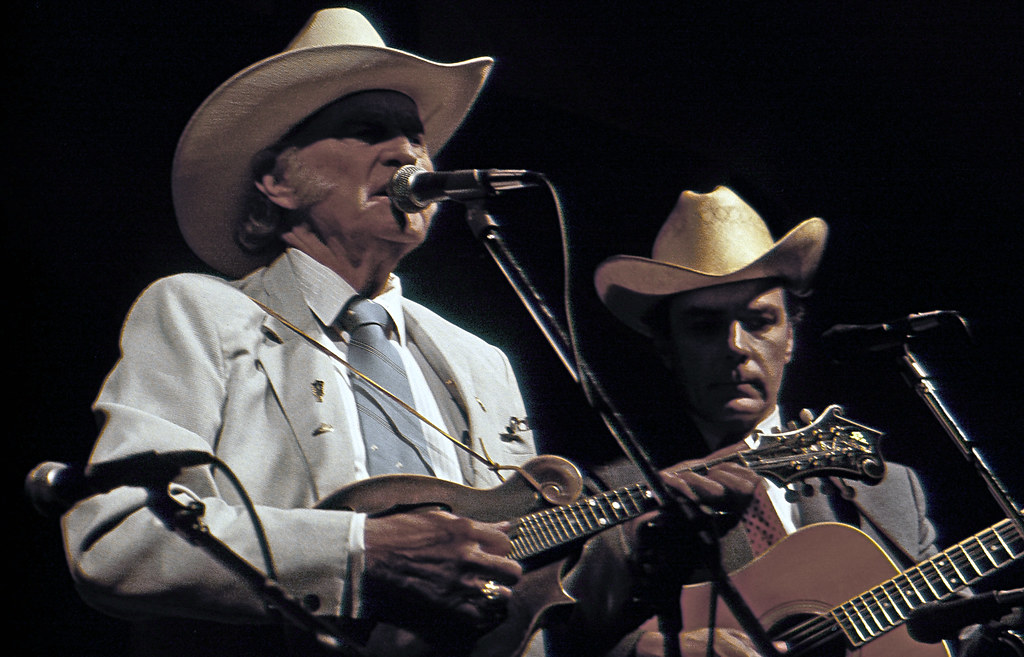
Cutting to the chase, I have identified the Covey’s likeness to one specific—and historically significant—bluegrass band whose original membership from 1939-1942 included the precise instrumentation of the Covey: mandolin, guitar, string bass, and fiddle. This seminal band represented the historical origin of the “bluegrass sound”. Known as Bill Monroe and the Blue Grass Boys, Monroe himself is credited as the “Father of Bluegrass music”. In brief for now, his early band had first “wowed” the managers of the Grand Ole Opry in 1939 with an up-tempo rendition of a more traditional song, “Mule Skinner Blues”. The Blue Grass Boys were hired on the spot for a lifetime commitment to the Opry, where they were featured performers for half a century (when not touring the eastern half of the U.S like the Covey). Monroe’s primary instrument was the mandolin, and he was credited with elevating that once-popular instrument to the occasional lead role of many bluegrass bands, including his own. Tam Amber would be proud! (See this site for an image of Monroe’s early group with the same instrumentation as the Covey. Also includes sample songs. Notice how they are all gathered around the mic, similar to the Covey.)
Interestingly, the use of the term “bluegrass” to define their new music style would not be used in print until more than a decade after their showstopping premier performance at the Opry in 1939. It turns out that Monroe had originally named his trend-setting band after his home state of Kentucky’s nick name, the Blue Grass State.
Strangely, the Covey instrumentation does not include a banjo, a traditionally African-American instrument (with origins in Africa) that became a quintessential feature of bluegrass music (see this informative 4-minute video on the African heritage of the banjo and its development in America). My only possible explanation at this time is that Bill Monroe’s original Blue Grass Boys likewise did not employ a banjo until he actively sought to add one in 1942. After that, it would become fairly standard to include a banjo within bluegrass bands. This is why the closest approximation I can find to the Covey is—quite precisely—Bill Monroe and the Bluegrass Boys as they existed in their earliest formation, between 1939 and 1942 as mentioned above. Given the propensity for Suzanne Collins to adopt a variety of early twentieth-century cultural and economic traits for her version of District 12, it would not surprise me if she decided specifically to model the Covey on the Blue Grass Boys of this era — including a possible “nod” to Bill Monroe with the fast-fingered picking of Tam Amber. However, this all remains speculation on my part, as I have absolutely no evidence that this was how she was thinking. Still, the similarities here are uncanny, so I’m running with it here.
The Covey and that Bluegrass Sound
Let’s take a sample look at the Covey’s own style. While Collins often makes readers guess and ponder her hidden meanings, we are fortunate in this case that she provides quite a thorough description of a typical Covey performance at the Hob (and yet another follow-up at the Peacekeeper base!).
With geographical roots that are southern, rural, African-American, Anglo-American, and Scots-Irish, bluegrass is first distinguished through its rather standard instrumental mix as mentioned earlier. The core of a typical bluegrass band usually features five different and complimentary “acoustic,” stringed instruments—those whose sounds are not enhanced or modified with electronic amplification. Thus, an electric guitar would not qualify for the “traditional bluegrass” genre, and traditional bluegrass fans will do anything they can to keep percussion sets away from a bluegrass performance (though this is more common today). A typical bluegrass group would consist of five non-amplified, string instruments, namely the mandolin, guitar, fiddle, five-string banjo, and upright bass, according to historian Stephanie Ledgin in her book, Homegrown Music: Discovering Bluegrass (2004). Another source defines a bluegrass group as needing at least four musicians and instrumentation that would include acoustic guitar, an upright bass, and banjo, “though these instruments are not mandatory,” given that the fiddle, mandolin, and resonator guitar (Dobro) are common as well (That High, Lonesome Sound). As one might expect, this is not a hard-and-fast rule for bluegrass bands, but this is the expected core of instrumentation.
The Covey fits this pattern almost precisely, as Maude Ivory introduces their members at the start of their show. Namely, Tam Amber arrives on stage first with his mandolin, followed sequentially by Clerk Carmine on fiddle, Barb Azure on base, and none other than Lucy Gray Baird (“fresh from her engagement in the Capitol”), with her guitar. We don’t know if Maude Ivory plays an instrument or not at this point, as she may focus on vocal performance at her young age. Beyond this instrumental makeup, there is no indication of additional current instruments, such as percussion, brass, or use of amplification—mirroring a pretty standard bluegrass group.
Beyond the current Covey, there was one additional member we also know about, namely Billy Taupe. His is a good example of how bluegrass band membership can change and shift with time. Not only is his name representative of the Covey lexicon—first name for a ballad, second for a color—but he also seems to walk around randomly carrying his former instrument that he once played with the group. This instrument is clearly a significant part of his own identity. At the end of their Hob performance, it is a somewhat inebriated Billy Taupe who approaches the stage to confront Lucy Gray and all of the Covey. As Collins narrates, “Over one shoulder hung a boxy instrument with part of a piano keyboard along one side.” Later in the story, the bulky instrument appears once again after Coriolanus and the Peacekeepers take Mayfair home. As Coriolanus leaves with his peers to head back to base, he was distracted by the sound of a “soft, mechanical wheeze”. A light from the house revealed Billy Taupe, who held his instrument, “the source of the wheeze, against his chest”. (Chapter 24). Given these descriptions, Billy’s instrument is most certainly the accordion. And part of him already misses not playing with his counterparts. As a true musician might argue, he claims “You’re all sounding thin. You’re sounding thin,” as one hand slaps his instrument. My point here is that, like traditional bluegrass groups, the Covey’s instrumentation and membership can change and adapt to circumstances over time. In fact, Bill Monroe’s group included an accordion player for a limited time (a woman named Sally Ann Forrester: 1943-46), and instruments such as the accordion, harmonica (mouth harp), and others occasionally show up in bluegrass bands. However–perhaps like Billy Taupe himself–these are supplemental and not fully necessary for bluegrass instrumentation.
As for the Covey’s leader, Lucy Gray opens the story’s first performance with an “old song” while the rest are “gathered in a close half circle around the mic”. This is standard practice for bluegrass performers, to utilize the mic for singing songs with two, three, or even four-part harmonies. Because these bands are typically acoustic with no electronic amplifiers, the mic actually plays a pivotal role in the group’s performance routine and projected sound. While electronically enhanced instruments are frowned upon, a lone mic on stage is not only acceptable but plays a critical role in a standard bluegrass performance. The mic serves as a minimalist though critical “sound reinforcement system” to make instruments and singers more audible to larger audiences (Ledgin 2004). In fact, the audience tends to demand this practice, as these avid listeners and fans are eager to pick out every instrument and vocal performer. As Smith describes, an important bluegrass skill for any serious musician is the ability to “maintain the proper relationship, spatially and thus aurally, with the rest of the band and the microphone.” (Smith 1965).
As for vocal style and pitch, the “high, lonesome sound” associated with bluegrass is not so much “Appalachian” in origin, but rather the legacy of the country singer, Jimmie Rodgers. He is considered the first country music star from the 1920s (along with the Carter Family) and is credited for establishing the popularity of the “blue yodel”. He further helped integrate the blues into country music and directly affected the eventual bluegrass sound (Perryman 2013). In fact, Bill Monroe adapted several of Rodger’s songs for his first recordings with the Blue Grass Boys and made good use of the Jimmie Rodgers yodel within his vocals. Most prominent was the very song that Monroe performed with the Blue Grass Boys during their premier at the Grand Ole Opry in 1939, Mule Skinner Blues. The song had previously been co-written by Jimmie Rodgers and titled simply Blue Yodel #8, revealing the yodel’s prominent role in the song. Monroe modified it and transformed it into a bluegrass favorite.
Further, the contribution of black musical traditions to the style of Jimmie Rodgers and later bluegrass music should not be understated. Yodeling had already been ingrained within African folk music, and traces were found within the field-hollers of African-Americans. The tradition likely influenced the singing of Jimmie Rodgers, who was raised in a predominantly black community. His style also incorporates that of the blues, a strong black influence (Phillips 1991). With so much historical mixing of such stylistic traits, bluegrass and its “high, lonesome” qualities essentially represent an ongoing cultural exchange among peoples from three continents: Europe, Africa, and North America. Bill Monroe just happened to be the one to creatively blend these elements into his own unique style that would eventually become known as bluegrass.
To conclude here, these are a few of the characteristics that define bluegrass music as a distinctive genre and why the Covey appear to epitomize this style more than any other. I would not be surprised if the future Lionsgate film features some pretty snappy bluegrass tunes to supplement the more traditional country numbers and ballads of Lucy Gray and her Covey family. I do hope the movie producers provide the Covey with plenty of “air time,” as their music should provide for one of the delightful highlights of the film adaptation! I would further not be surprised to see yet another generational resurgence of interest in bluegrass music and maybe even the otherwise obscure mandolin (please see my related post, Tam Amber’s “Teardrop” Mandolin.)
Want a taste of bluegrass video?
Watch this to see a close approximation to the Covey’s performance style as described in The Ballad of Songbirds and Snakes: A sample performance of Bill Monroe and the Blue Grass Boys, around the late 1960s or early 70s for a TV show called “The Country Place”. Notice how musicians come in and out of the lead role, taking turns. The vocals are gathered around a single mic, like the Covey. This also speaks to the diverse origins of bluegrass music, the repertoire for which includes traditional gospel music such as the first number here. Also, an excellent example of the so-called “high, lonesome sound” characteristic of bluegrass harmonies.
Here’s a fun 15-minute sampling of a professional bluegrass performance, a one-time concert of with bluegrass/country stars including Ricky Skaggs (who tears it up on the mandolin!), Travis Tritt, Vince Gill, Patty Loveless, and the “great” Earl Scruggs, the father of the 3-finger roll picking style on the banjo (who got his start with the Blue Grass Boys in 1945!). You’ll find numerous other bluegrass videos like this as well.
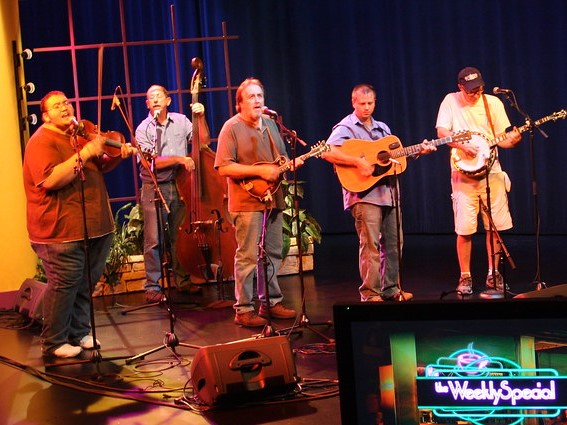
Example of modern-day, 4-member bluegrass band (with banjo replacing mandolin in this case): Southern Raised Bluegrass Band performs “Orange Blossom Special,” a bluegrass classic (along with a creative music video and some other integrated songs!)
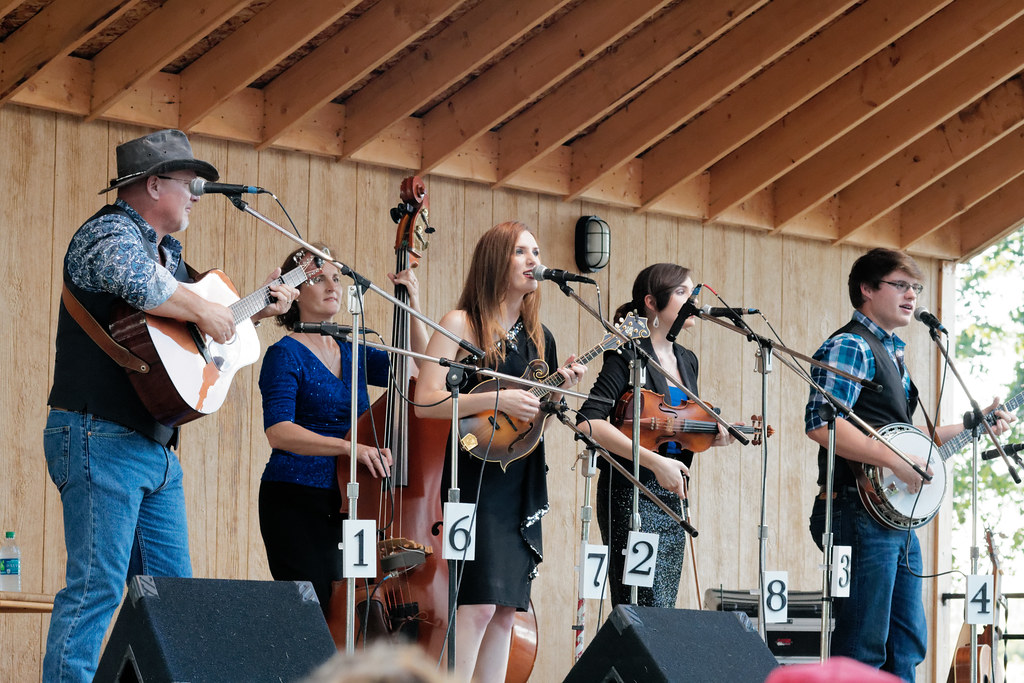
A traditional, 6-member bluegrass group with standard bluegrass instrumentation (with two fiddles and banjos), the Augusta Bluegrass Women, performing during Bluegrass Week (2014) at the Augusta Heritage Center of Davis and Elkins College, WV. A great example of a local band (not necessarily professional musicians) having fun with their music and performance (like the two local bands pictured above). This is similar to the numerous bluegrass festivals that are held every year and attract untold numbers of local bluegrass bands and enthusiastic audiences.
Feature post image: Bill Monroe performing on his Gibson F-5 mandolin in 1989, 50 years after his debut at the Grand Ole Opry. (Courtesy of Barry Brower, Creative Commons)
REFERENCES:
Ledgin, Stephanie. 2004. Homegrown Music: Discovering Bluegrass. (ABC-CLIO Publishing).
Perryman, Charles. 2013. Africa, Appalachia, and Acculturation: The History of Bluegrass Music. West Virginia University dissertation.
Phillips, John. 1991. “The African Heritage of White America,” in Africanisms in American Culture, ed. Joseph E. Holloway, (Bloomington: Indiana University Press).
Smith, Mayne. 1965. An Introduction to Bluegrass. The Journal of American Folklore, Vol. 78, No. 309, pp. 245-256.
That High, Lonesome Sound: A Guide to the Instruments in Bluegrass. Accessed 03 August, 2020.
What Happened to Lucy Gray?
(NOTE: Spoiler Alert for the Ballad of Songbirds and Snakes)
A considerable amount of discussion is occurring right now about the whereabouts of Lucy Gray Baird near the end of The Ballad of Songbirds and Snakes (BSAS). In typical form for Suzanne Collins, this is one of numerous aspects that she leaves hanging at the end, fueling even further speculation that future books might be coming (or not). While there is reason to believe that Lucy Gray actually dies at the end of the story — and quite logically due to the fact that an impulsive Coriolanus tries to shoot her — I am not yet convinced. There is little or no evidence in the actual narrative that she is even injured, let alone deceased (please bear with me as I play this out below). Admittedly, those who believe she dies have good reasoning to back them up, namely the ballad for which she is named, “Lucy Gray”. If this isn’t a classic case of foreshadowing, I don’t know what is. And just as in “her” ballad, Lucy Gray does indeed disappear within the story. But there is no evidence here of actual death, since the original poem by Wordsworth is modified and only signals disappearance. We don’t know for how long Lucy Gray’s whereabouts will remain unknown.
As a bit of background, the original “Lucy Gray” is a poem written by William Wordsworth in 1799 and is one of his most well-known works. It was also later published in Wordsworth’s Lyrical Ballads. The original poem is based on a true event that was told to Wordsworth by his sister about a little girl in Yorkshire, England who became lost in a snow storm. Her parents traced her footsteps to the middle of a canal lock, where they disappeared. Eventually, this girl’s body was actually found in the canal. In Wordsworth’s version, however, the lost girl simply vanishes into nowhere, likely a spirit which, some say, can still be seen “Upon the lonesome wild”.
The Lucy Gray of Suzanne Collins’ creation clearly parallels the Wordsworth poem as Maude Ivory explains in BSAS. Maude explains that “We mixed it up a little” to change the words to better represent Lucy Gray’s life in the Covey (p. 424 BSAS). Those who believe this Lucy Gray actually perishes at the end can rationally point to both the original and altered poems that suggest Lucy should essentially become a ghost at the conclusion of the story. A supporting argument relates to the confusing exchange in Chapter 30 when Coriolanus is chasing Lucy Gray wildly through the woods and attempts to shoot at her through the trees. He clearly cannot see her, however, and there is no clear indication of whether his bullets hit her (fatally or not). He does hear “a faint cry,” which some interpret as Lucy being hit.
Despite these rational arguments, I’m not convinced. Even if she was struck by a bullet, it could be a non-fatal injury, if she was even hit at all. A flock of birds took off at the same time he heard the cry (p. 583 BSAS). And, she was nowhere to be seen when he reached the spot he thought she would be. Further, it is after this exchange when Lucy somehow amazingly keeps her composure enough to capably sing The Hanging Tree, as a final symbolic gesture to Coriolanus. The mockingjays then fittingly pick up the song with not a little irony.
It is further important to note that Lucy Gray likely knows that forested area like the back of her hand, which Coriolanus does not. She knows where to run and how to get around. A possible clue about her familiarity with the woods is found in Chapter 27, when an unsure Coriolanus asks Lucy Gray how Tam Amber knows the way to the lake. She replies matter-of-factly, “We all know the way. . . It’s our second home”. Suzanne Collins may have included that earlier conversation as a clue for later, indicating that Lucy Gray can easily find her way around the lake and through the forest. And the forest undergrowth is quite thick, which is primarily what impedes Coriolanus’s view — and scrapes him up as well. If it was simply a thinned forest with tree trunks, he would likely have been able to see where she went. Much of the forest in the south-central Appalachians consists of dense undergrowth and a variety of deciduous and evergreen tree species. For someone unfamiliar with such a wide patch of forested land, good luck to them! This is all to say that there is consequently very little, if any, evidence that Coriolanus actually kills her.
Does she disappear as indicated in the poem? Yes—at least until the end of Chapter 30. And this is where all the speculation arises now as to her whereabouts. One possibility is that she simply wandered home to deal with her nemesis, the Mayor, head on while rejoining the Covey. She does admit to Coriolanus earlier that she is not too keen on living in the wild. She says, “It’s not just how hard it will be. It’s too lonely. I might’ve made it for a few days, but then I’d have come home to the Covey” (p. 491, BSAS). Of course, she also admits that the Covey can “get by,” and that Maude Ivory will be old enough to lead the group in a few years. But this reflection on her part came when she was still planning to escape with Coriolanus. Now suddenly without him by her side, it is very possible that she simply went back home. Her one true concern in life was to protect her Covey family, so it is reasonable that her determination in this regard is what finally sends her home (not to mention the foreboding loneliness of the Appalachian mountains).
A New “Theory” of Three Kills
There is one other possible reason why I personally believe Lucy Gray is still alive at the end of BSAS. And despite all of the strong arguments one way or another in the fandom world, I have yet to see this hypothesis (not sure that it’s really a theory yet in the literal sense, but I’ll call it that for now). This argument in support of Lucy’s continued living is based on Suzanne Collins’ continued and strategic use of the number “three”. A lot of things occur in threes throughout the original trilogy (including the chapter numbering and total number of books in the original series). This trend continues apace in BSAS. In fact, there are at least three prominent examples of the use of “threes” that I managed to take note of while reading. The first is the well-known murder of three men by the condemned Arlo Chance, which serves as the fodder for Lucy Gray’s new song, The Hanging Tree. Beyond this, however, Lucy Gray admits to three of her own “kills” during the Tenth Hunger Games, namely Wovey, Reaper, and Treech. She explains each of these in turn in Chapter 24. The first (Wovey) she claims to have been a mistake (she had been “gunning for Coral”). The second was Reaper, which was a “mercy killing”. And Treech’s fate came through her own self-defense with the viper.
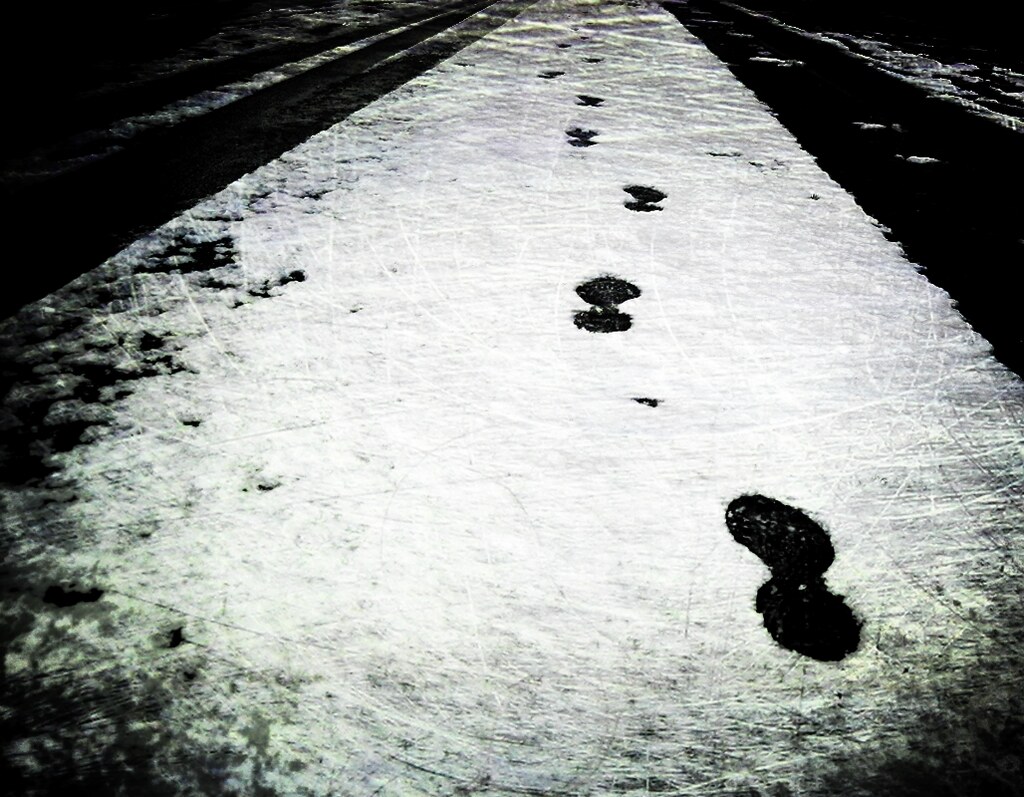
The other set of threes has apparently not been considered much in discussions surrounding Lucy Gray’s eventual fate. This involves Coriolanus’s own “kills,” the third of which ends up being Sejanus. Thus, both Coriolanus and Lucy Gray claim three kills each, through the end of Chapter 30. Would Suzanne Collins suddenly defy her habit of using groups of three to allow one more “kill” for Coriolanus? If he actually killed Lucy Gray, this would be his fourth, countering Collins’ own trend. Is this a clue she left us as to the fate of Lucy Gray? We will not know for sure, of course, until (and if) she publishes another book—and only if she decides to continue her character’s story. Now, the one possible glitch in this theory (or whatever it is) is in the Epilogue, when Coriolanus actually does successfully knock off poor Dean Highbottom. However, this occurs technically in the Epilogue, which is not part of the main story. I have to admit the chance, however, that the Epilogue may punch a serious hole in my argument. Still, I can’t see Suzanne Collins suddenly abandoning her trend of “threes,” which to me is a possible code that Lucy Gray is still alive. Until we learn otherwise, however, her footprints will remain as in the Wordsworth poem, suddenly ending in the snow with no Lucy Gray in sight.
Postscript:
One might find it fascinating as I did to learn how closely their final exchange in the woods parallels the actual final verse of the Wordsworth poem. The verse reads as follows:
O’er rough and smooth she trips along,
And never looks behind;
And sings a solitary song
That whistles in the wind.
It appears that Suzanne Collins purposely crafted Lucy Gray’s disappearance in the woods to closely match this final verse. In BSAS, Lucy Gray certainly “trips along” through the woods as Coriolanus chases her and for some time at least, “never looks behind”. Then she sings her “solitary song” (The Hanging Tree) for Coriolanus’s benefit. The song essentially “whistles in the wind” as the mockingjays pick up the tune. Quite the fitting conclusion for Lucy Gray and her own ballad of life!
(Photo: “Winter Road” by Hotel Ocho, Creative Commons)
Meet the Author
 Tom Paradis

This site inspired by a first-year seminar on the Hunger Games at Butler University.

 The World of Panem