The World of Panem
Interpreting Society, Geography, and Characters of the Hunger Games
What Lies Beneath the Snow: How Lucy Gray, Coriolanus, and Sejanus Explore Human Nature Throughout Songbirds and Snakes
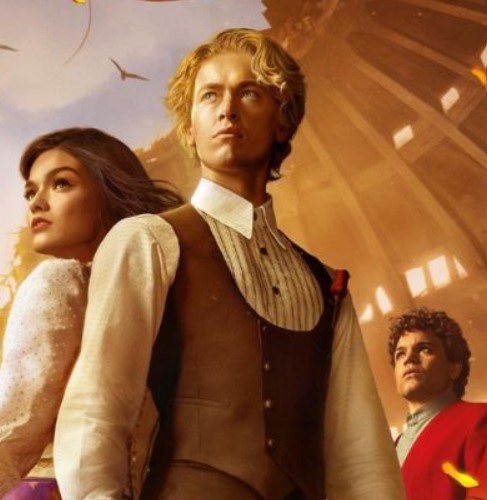
(Author’s Note: Material here is adapted from sections of my companion book, Behind the Ballads.)
There’s no doubt that featuring Coriolanus Snow in the first prequel caused some controversy. Despite what Coryo may think, however, it’s not all about him. We find that beneath the surface of Collins’ plot and main character is a grander purpose. The novel was designed in its entirety to encourage our exploration of human nature and the related governing systems that may or may not serve us well. This was no trivial undertaking on Collins’ part (for more, see her incredible Scholastic interview). Differing notions of what explains human beings have led to spin-off political structures around the world, including that of the United States. The first hint of Collins’ fundamental purpose for writing the prequel came with her comments below on the day of its release, May 19, 2020:
With this book, I wanted to explore the state of nature, who we are, and what we perceive is required for our survival. The reconstruction period ten years after the war, commonly referred to as the Dark Days—as the country of Panem struggles back to its feet—provides fertile ground for characters to grapple with these questions and thereby define their views of humanity. (“News Room”)
While easy—or tempting—to overlook in favor of diving into the 10th Games, Collins’ one-page epigraph offers five thought-provoking quotes to set the stage for her story. And probably more to the point for readers and viewers of Ballad, this material helps us unlock the varied worldviews of Coriolanus, Sejanus, and Lucy Gray. What better way to learn about the great thinkers of Europe’s Enlightenment Era than to read an absorbing Hunger Games prequel? The remainder of this post will consider each character in turn.
Lucy Gray, Rousseau, and Frankenstein

Lucy Gray’s philosophy on life is especially highlighted in two conversations with Coriolanus in both the book and film. As the happy couple is leaving District 12 for a promising new life in the wilderness, Coriolanus mentions that people are “mostly awful.” This provides an opening for Lucy Gray. She says, “People aren’t so bad, really… It’s what the world does to them. Like us, in the arena. We did things in there we’d never have considered if they’d just left us alone” (BSS 492). Following more dialogue, she adds, “I think there’s a natural goodness built into human beings. You know when you’ve stepped across the line into evil, and it’s your life’s challenge to try and stay on the right side of that line.” In the so-called “nature versus nurture” debate, she basically believes we are all born as decent and pure beings. Only later does the world potentially corrupt and eat away at that goodness.
Lucy Grays’s overarching philosophy can be matched most closely with that of the Enlightenment thinker, Jean-Jacques Rousseau (1712-1778) (Frankel, “Songbirds”). In the prequel’s epigraph Collins provides a quote from Rousseau’s The Social Contract (1762): “Man is born free; and everywhere he is in chains.” This succinctly states his belief that people are born with inherent goodness until rendered corrupt by society’s myriad of challenges and hardships.
This line of thought translates into Rousseau’s ideal form of government. His central political doctrine is that a state can be legitimate only if it is guided by the “general will” of its members. The people will enjoy the protection provided by the state while still retaining their individual freedoms. In The Social Contract Rousseau tackled what he considered to be the fundamental question of politics—that is, how to reconcile the freedom of the individual with the authority of the state (“Jean Jacques”). He argued that the laws of the state are ideally willed and approved by the citizens themselves. Thus, one is simply following the people’s collective will by obeying the laws. As a result, the subjects of this government essentially remain free. As Frankel suggests, “The Covey model this peaceful, utopian self-rule. If Lucy Gray were to build a government, she would choose this kind” (Frankel, “Songbirds” 41-42). Since people are naturally decent, she believes they can police themselves.
Collins’ epigraph also includes a quote from Mary Shelley’s Frankenstein in support of Rousseau: “I thought of the promise of virtues which he had displayed on the opening of his existence and the subsequent blight of all kindly feeling by the loathing and scorn which his protectors had manifested towards him.” In her book, Shelley applies Rousseau’s theories by creating Frankenstein with a blank slate who has unlimited potential. While he begins his manufactured life completely benevolent and harmless, it is the incessant mistreatment and abuse from ignorant humans that turn him violent. As Frankel writes, “Certainly, the entire Hunger Games series stresses this, with characters from Peeta to Cato explaining that the games have made them killers” (Frankel, “Songbirds”). Lucy Gray demonstrates that people are inherently decent by saving Coriolanus not once, but twice—inside the tribute truck and during the arena bombing. Though genuinely grateful, Coriolanus remains puzzled and wonders why she didn’t simply escape from the arena when given the chance.
Lucy Gray’s behavior counters Coriolanus’ belief that people are self-centered and therefore need to be forcefully controlled. Rousseau’s connection between individual freedom of choice and the innate decency of humans is critical to his argument against authoritarian government. To renounce freedom in favor of another person’s authority is contrary to one’s morality (“Jean Jacques”). Nonetheless, Coriolanus ultimately comes to prefer the strict authoritarian controls promoted by Thomas Hobbes, as explored below.
Coriolanus, Gaul, and Thomas Hobbes
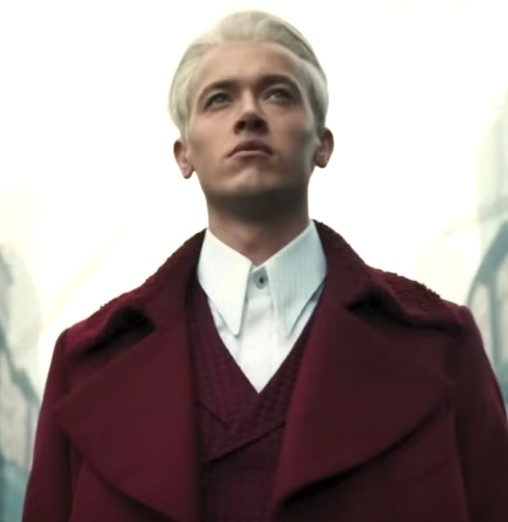
Another opening quote in the epigraph features the philosopher Thomas Hobbes, taken from his Leviathan (1651): “Hereby it is manifest, that during the time men live without a common Power to keep them all in awe, they are in that condition which is called Warre; and such a warre, as is of every man, against every man.” Cutting to the chase here, Coriolanus can be considered Hobbes reincarnate—a veritable avatar of Hobbesian thinking on the state of humanity. And in his time Hobbes believed that humanity’s normal state was one of perpetual war. Not fun. And definitely “not candy,” to quote Ballad’s own Lucky Flickerman.
To better understand Coriolanus, then, we must turn to Hobbes, whose upbringing was shaped by the incessant brutality of the English Civil War. His own childhood was fundamentally affected by observing his country’s political disintegration. He came to believe that even the most oppressive government would be favorable to the horrors and chaos produced by civil war. He further argued that continued stability could only be guaranteed if people agreed to refrain from undermining the regime. Perhaps most apropos for Coriolanus, Hobbes pressed for a reciprocal relationship between political obedience and peace.
To emphasize his point, Hobbes invited his contemporaries to consider what life would be like in a state of nature—or said another way, a society without a centralized government. In return for providing so-called peace and security for the districts, as his propaganda video claims, the districts supply resources the Capitol needs. This basic thinking represents a colonial economic system. Extractive resources like lumber, coal, and grain flow from the exploited colonies (e.g. colonial America) to the colonizing power (e.g. Britain) for the manufacturing of everyday products. In the real world, at least some of those products filter back to the colonies for purchase in peripheral markets. Not so much in Panem’s districts, however.
As one might expect, Hobbes’ preference for an authoritarian state did not sit well with England’s common folk. He spent a decade in exile in Paris, having left England in 1640 and not returning until 1651. His exile was related to the ongoing civil war and his stalwart perspectives on the conflict. Because he supported the royalists, Hobbes may have feared punishment due to his persistent defense of absolute sovereignty. He wrote Leviathan while finishing his sojourn in France, and it was published the year of his return to England in 1651.
Hobbes became famous for his elaborate writings on what came to be known as social contract theory. Essentially, he justified political principles around which a population should unite to govern themselves. Most famously, he applied his theory of the social contract to his astonishing conclusion that citizens should limit their freedoms and submit to an absolute sovereign power. Rather than take him seriously, however, his perspective has often been used as a foil to argue for more democratic political systems (“Hobbes’s”).
Strangely, Hobbes somehow left a giant loophole within his social contract theory. That is, he reserves the right of a government’s subjects—its people—to disobey the state’s commands when deemed necessary. Say what? The people retain the right, he argues, to defend themselves against a sovereign power—that is, to resist, rebel, and disobey—when their lives are in danger, or when their families or even their honor are at stake. Those who have studied Hobbes have been understandably intrigued, if not puzzled, with what he calls the “true liberties of subjects.” More recent commentators have viewed this as the Achilles’ heel of Hobbes’ theory (“Hobbes’s”).
Perhaps had the younger Snow studied Hobbes more thoroughly, he may have taken this important qualification to heart. Katniss and her rebel followers sure did.
Coming full circle, Dr. Gaul reframes Hobbes’ core beliefs as the trifecta of chaos, control, and contract. Coriolanus struggles with these concepts off and on throughout much of the prequel. As a follow-up to his essay on what he liked about the war, Dr. Gaul asks Coriolanus to elaborate on the value of control. Coriolanus tells her, “Chaos happens. What else is there to say?” to which Gaul responds, “Oh, a good deal, I think. Start with that. Chaos. No control, no law, no government at all. Like being in the arena. Where do we go from there? What sort of agreement is necessary if we’re to live in peace? What sort of social contract is required for survival?” (BSS 244).
As readers attempt to follow his thinking, we thereby witness the young Snow’s education in Hobbesian theory. Within his final essay to Dr. Gaul, Coriolanus concludes, “Without the control to enforce the contract, chaos reigned. The power that controlled needed to be greater than the people—otherwise, they would challenge it. The only entity capable of this was the Capitol” (BSS 292).
Upon returning from his adventures in District 12, he encounters Dr. Gaul for a follow-up conversation. She asks, “Did you think about the Hunger Games?” Elaborating from his earlier thoughts, he says, “They’re not just to punish the districts, they’re part of the eternal war… And they’re a reminder of what we did to each other, what we have the potential to do again, because of who we are.” Dr. Gaul then asks who we are, to which he responds, “Creatures who need the Capitol to survive” (BSS 508-9). And right there is the Hobbesian perspective undressed.
Sejanus and John Locke
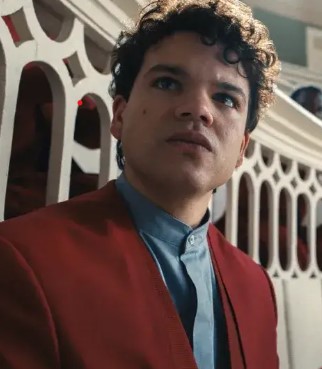
We gain more insights into Sejanus’ character through his own belief system. Collins’ epigraph also provides a quote from Enlightenment thinker John Locke (1632-1704): “The state of nature has a law of nature to govern it, which obliges every one: and reason, which is that law, teaches all mankind, who will but consult it, that being all equal and independent, no one ought to harm another in his life, health, liberty, or possessions…” (Second Treatise of Government, 1689). As Locke’s quote attests, the natural condition of humans is characterized by freedom and equality. To preserve one’s liberty, health, and property is a natural-born right that everyone enjoys.
However, Locke further recognized that natural law was insufficient to protect people’s lives and property. A set of common laws is also necessary, created through a voluntary “social contract” in which the people willingly give up some power to a central government. Should the government not fulfill its obligation, the people have a natural right to form a new one. Consequently, the public holds the right to resist authority. No less than America’s Founders took Locke’s philosophies to heart as they proceeded with their own populous rebellion. Thomas Jefferson and his peers embraced Locke’s fundamental ideas and inscribed them into the Declaration of Independence.
During the 17th and 18th centuries it was common for philosophers to write about natural rights theory and the notion of the social contract. Natural rights are those that humans are said to enjoy before a centralized government comes into being. For instance, we all have the right to struggle for our own survival, just like other animals. This is Locke’s fundamental view as well. To explain the importance of government, Locke proposes that living conditions in the state of nature are unsatisfactory. In turn, people agree to transfer some of their natural-born rights to a central government to protect people’s lives, liberty, and property. This essentially describes the notion of social contract theory.
Although government is necessary to uphold the people’s will, Locke spends much of his writing in opposition to authoritarianism. Rather, sovereignty resides in the people. He was radical for his time in further calling for the separation of Church and State in his Letter Concerning Toleration. Locke preferred that each of us use our own reasoning to search for truth rather than simply accepting the opinions of so-called authorities (“John”).
With his unwavering concern for human rights, Sejanus becomes the unwitting personification of John Locke and his worldview. We first witness this parallel when an emotional Sejanus explains why he had suggested trading tributes—that is, Marcus for Lucy Gray. He erupts, “It’s just this whole Hunger Games thing is making me crazy! I mean, what are we doing? Putting kids in an arena to kill each other? It feels wrong on so many levels. Animals protect their young, right? And so do we. We try to protect children! It’s built into us as human beings. Who really wants to do this? It’s unnatural!” (BSS 76).
Later he courageously lashes out at Dr. Gaul, arguing, “You’ve no right to starve people, to punish them for no reason. No right to take away their life and freedom. Those are things everyone is born with, and they’re not yours for the taking. Winning a war doesn’t give you that right. Having more weapons doesn’t give you that right. Being from the Capitol doesn’t give you that right. Nothing does” (BSS 160). The film’s Sejanus includes a variation on this powerful statement. He adds that Panem’s government exists to protect everyone—district and Capitol citizen alike. Either way, Sejanus’ notion of inalienable rights could have easily been voiced by John Locke himself.
In sum, with all of these timeless ideas to ponder, Snow may indeed land on top. But what lies beneath may exist the most enlightening story of all.
References
Frankel, V. Songbirds, Snakes & Sacrifice: Collins’ Prequel References and Philosophies Explained. LitCrit Press, 2020.
“Hobbes’s Moral and Political Philosophy.” Stanford Encyclopedia of Philosophy, revised 12 September, 2022.
“Jean Jacques Rousseau.” Stanford Encyclopedia of Philosophy, revised 21 April, 2023.
“John Locke.” Stanford Encyclopedia of Philosophy, revised 07 July, 2022.
“News Room,” Scholastic.com, 04 October 2019.
IMAGES: Lucy Gray headshot (ENews); Sejanus headshot (Lionsgate); Coriolanus headshot (CBR); Featured Post Image (DrydenWire)
One Comment on “What Lies Beneath the Snow: How Lucy Gray, Coriolanus, and Sejanus Explore Human Nature Throughout Songbirds and Snakes”
Leave a Reply
Meet the Author
 Tom Paradis

This site inspired by a first-year seminar on the Hunger Games at Butler University.



Pingback: Unpacking David Hume’s “Implicit Submission”: How He Might Critique Songbirds and Snakes and the Social Contract – The World of Panem