The World of Panem
Interpreting Society, Geography, and Characters of the Hunger Games
Pa Abernathy’s Big Metaphor: Painting Posters and Reclaiming the Narrative
Warning: Spoilers ahead for Sunrise on the Reaping
Author’s Fun Note: Sarshee Whitcomb is likely named for author and poet, James Whitcomb Riley (1849-1916), known as the “Hoosier poet” in Indiana for his accomplishments in children’s poetry and as a best-selling author. Given that Suzanne Collins completed her bachelor’s degree at IU-Bloomington, this local prominent author certainly did not escape her attention.
Aside from the speedy Woodbine Chance who nearly escapes the reaping, another unsung tribute plays a significant role in the plot of Sunrise. Sarshee Whitcomb is introduced to us gradually within the spectacular whirlwind that is the first two chapters (Wow!). Haymitch eventually takes a breath and recalls that Sarshee was the daughter of his Pa’s old crew boss in the mines who was reaped several years earlier. Her father had died of black lung disease before the reaping, leaving Sarshee orphaned and without family visitors. Haymitch therefore went along with his parents to the Justice Building to say goodbye, assuring that she would not be entirely alone during her final minutes in District 12. In one respect this compassionate act serves as yet another indicator of the Seam’s strong community ties and their mutual support for one another. More to the point of Collins’ storyline, however, it is Sarshee’s unwitting story of saying goodbye that sets up one of the most compelling themes of Sunrise — that of “painting posters.”
The first to mention the notion of painting posters was actually Haymitch’s Ma, Willamae Abernathy. During the the drama of the reaping, she asks Haymitch, “You remember what Pa said to the Whitcomb child?” Ma says urgently. “It still goes.” This triggers Haymitch’s memory just long enough to recall his Pa telling Sarshee, “Don’t let them use you, Sarshee, Don’t — ” (SOR 34). At this point, Drusilla interrupts and Haymitch is tazed and forced onto the train. Now underway, he relaxes somewhat and recalls what his Pa had said to Sarshee in the Justice Building:
Don’t let them use you, Sarshee. Don’t let them paint their posters with your blood. Not if you can help it. – Pa Abernathy (SOR 49)
As the story’s narrator, Haymitch then thinks aloud for us to consider what this means. He says, “That’s what Ma wanted me to remember. Even though – maybe especially because – she had just let Plutarch use her and Sid like puppets. She had failed, but wanted me to be strong.” (49) What Haymitch may not have considered yet was that his Ma certainly made this strategic decision to gain some precious time with her oldest son.
We can interpret Pa Abernathy’s original “painting posters with your blood” as a metaphor for how oppressive regimes utilize propaganda to control their narrative. While the “posters” represent the government’s control of information through propaganda, the “blood” represents the population being exploited for the benefit of those in power — or those with the money — which is always one and the same. Basically Pa was imploring Sarshee to not validate the Capitol’s narrative with her own actions or images.
Haymitch puts it another way, just after his name is called during the second take of the reaping. He sees the camera cut to Lenore Dove, who “isn’t crying, so Plutarch won’t get his tearful good-bye. Not from her and not from me. They will not use our tears for their entertainment“ (SOR 28). Perhaps ironically, this latter quote has been deployed extensively for Scholastic’s marketing campaigns to promote the prequel (wink), which further indicates the centrality of Collins’ vital message. Although Haymitch had not realized it yet at the reaping, he had already “painted his own poster” of resistance by refusing to let the Capitol’s propaganda machine use their sorrowful goodbyes for good television.
For his part, Haymitch first makes the connection between resisting authority and painting posters during the tribute parade fiasco. He correctly supposes the Capitol will likely remove Louella’s body to hide their own incompetence and to avoid any potential negative publicity. He reflects, “This is not the blood they want to paint their posters with.” At this point Haymitch’s courage starts to build, thinking of options for active defiance. He considers, “maybe it does make a difference if I resist as best I can. Maybe this is where I paint my own poster.” (78) His next decision is incredible, ending with Haymitch holding Louella’s lifeless body in front of a stunned President Snow.
After Haymitch works out the full meaning of his Pa’s directive, he quickly turns the phrase to his own advantage. As noted above, he considers that he might paint his own poster instead, essentially appropriating the “poster” metaphor as a symbol of resistance against the Capitol. And so it goes for the remainder of the novel. Eventually he shares the poster metaphor with Maysilee, which makes for some thoughtful dialogue between the duo. As the story’s narrator, Haymitch relates the following conversation:
We sit smack down in the clump of katniss, side by side, completely done in. I can barely hear her whisper. “One of us has to win this thing.” My eyes travel up the long stems to the arrow-shaped leaves, the white petals, concealing us from Capitol cameras. “Why’s that?” I whisper back. “One of us has to be the worst victor in history. Tear up their scripts, tear down their celebrations, set fire to the Victor’s Village. Refuse to play their game.” Reminds me of Pa. “Make sure they don’t use our blood to paint their posters?” “Exactly. We’ll paint our own posters. And I know just where we can get the paint.” In a gesture I remember from the schoolyard long ago, she extends her pinkie. “Swear it.” I encircle it with my own and our pinkies lock tight. They will never let me be a victor, not after my attempt to break the arena, but I can swear to try to keep her alive. “One of us paints the posters.” (290)
There’s a lot to unpack here. First is the reference to Katniss and the connotation that she is protecting these early rebels to eventually take on the cause herself. Then Maysilee becomes determined to burn it all down, refusing to “play their game.” This is Haymitch’s opening to suggest they paint their own posters of defiance, to which she agrees. Then she throws in the quip about knowing where they can find the paint, a reference to her ongoing secret about Lenore Dove. At this point the comment passes over Haymitch’s head. The pinkie swear then sets up a life-long promise, to paint the ultimate poster of rebellion against the Capitol and the Games. Though not believing he can win, he promises to his newfound sibling that one of them will get the job done. Later back home, he will make a similar — and even more dramatic — promise to the ghost of Lenore Dove.
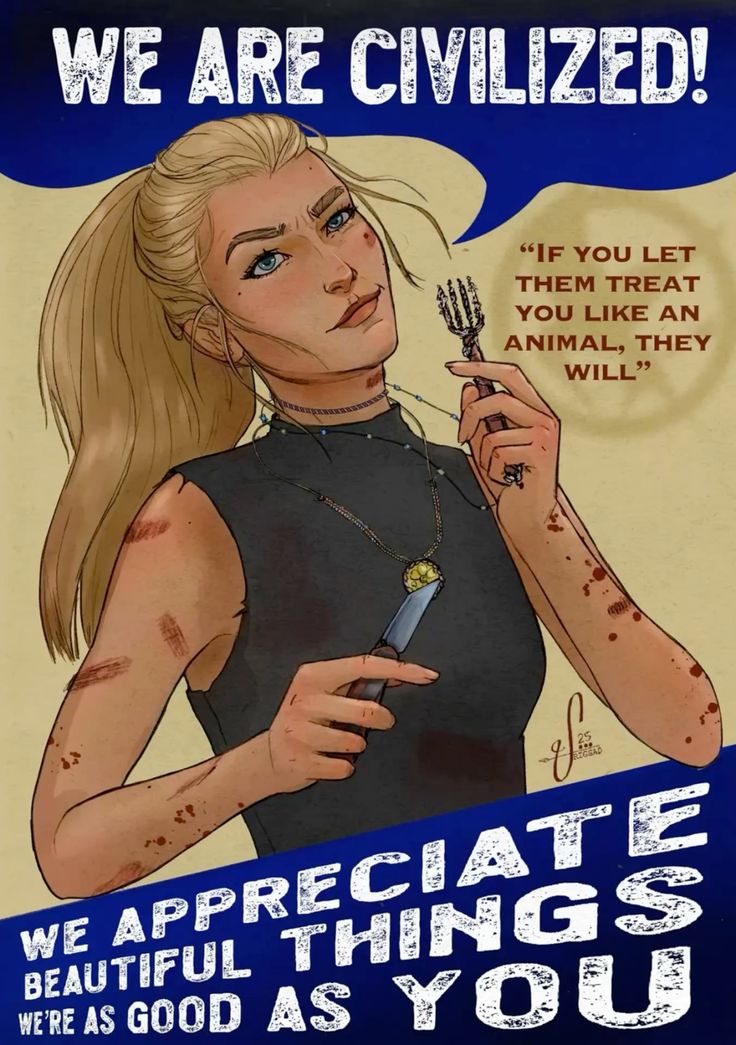
Haymitch and Maysilee continue to find ways to “paint their own posters” of defiance within the arena. They often do so in an attempt to maintain their sense of humanity while refusing to validate the Capitol’s narrative that district residents are no better than animals. This is why a defiant Maysilee is intent on demonstrating that all district people are equal to or better (and smarter) than her Capitol counterparts. She demands cutlery and plates on the train, and she lays out a stunning breakfast setting for Haymitch and herself within the arena. She is taking the advice given to Sarshee Whitcomb to heart. When Haymitch thanks her for setting out a “breakfast so fancy,” Maysilee responds, “Thought I’d kick off the day with a poster.” (294) This language becomes a secret code between them in the arena, since those overseeing the Games presumably have no knowledge of Pa’s earlier “poster” metaphor.
Haymitch then makes the connection between Maysilee’s behaviors and her own style of defiance. He reflects,
And I remember her words that first day on the train. “Listen, Louella, if you let them treat you like an animal, they will. So don’t let them.” This morning’s poster says, We’re civilized. We appreciate beautiful things. We’re as good as you. It’s an extension of her whole campaign to show the Capitol our value. Will they know that she’s referring to rebellion? I doubt it. They don’t know what Pa’s told me. A poster could merely be promoting us as tributes. And what harm is there in a few flower napkins anyway? “Nice paint job,” I say, and actually get a smile. (294)
The poster metaphor further relates to another of Collins’ central themes, that of implicit submission. This is introduced in a quote by philosopher David Hume within the novel’s opening epigraph. To paraphrase, Hume (or more directly, Collins) is asking why so many people passively consent to a small cadre of leaders with little initiative to resist or rebel (go here for a more thorough focus on implicit submission and David Hume). By directing Sarshee to not let them paint their posters with her blood, Pa was appealing her to not tacitly give in to authority — to not implicitly submit. Haymitch connects these related concepts in the following exchange with Plutarch:
“No more implicit submission for you, Haymitch Abernathy. Blow that water tank sky high. The entire country needs you to.” I can’t help but think of Pa’s directive to Sarshee Whitcomb. Seems like a lot to lay on my doorstep. Fix this mess for us, or else. (SOR 197)
Basically, to implicitly submit to authority is to allow them to “paint their posters with your blood.” Both concepts imply a lack of willpower or courage to resist oppressive regimes and their leaders. By this time in the story, both Haymitch and Maysilee have found a variety of ways to paint their own posters as noted above. Then Haymitch turns to an act of kindness to demonstrate a shared sense of humanity and exploitation common to all the tributes — Careers and Newcomers alike. In a rather tearjerking scene, he notices Silka taking a break below his tree, and he makes an instant decision to demonstrate unity among the tributes:
I become intensely aware of the three of us, huddled around this tree, the last trio of human heartbeats in the arena. Sad, desperate, but also a rare moment of district unity in the Games. You know what would make it even better? I drop a handful of chocolate balls into the night. A startled sound. The sobs soften to sniffles. A candy wrapper crackles. Quiet. Not a bad poster, all in all. (314)
This is a subtle though powerful statement of kindness, unity, and empathy toward a tribute who is designated by the Capitol to be a lethal enemy. The last thing Capitol residents and oddsmakers want to see are tributes being kind to one another. This is nothing less than a serious act of defiance against the Capitol, against the spirit of the Games (designed to divide rather than unify the districts), and against a cold-hearted president.
This act is reminiscent of a similar act of kindness and compassion that would openly defy the Capitol a quarter century later in the form of one Katniss Everdeen. She comforts Rue in her final minutes of life and places flowers around her body to honor Rue’s death and life. While she may not recognize her act as a conscious act of defiance, it is still precisely that. Kindness has no place in the Games. Katniss had painted her own poster without knowing it, and she would do so many times thereafter (along with many of her peers). Another post — perhaps Part 2 to this one — might apply Pa Abernathy’s big metaphor of painting posters to the original trilogy.
Then in final dramatic fashion — in what may constitute the very climax of the storyline — Haymitch hits the bottle hard and finds himself in a back alley of the District 12 townscape. He awakes to find himself staring at a message of graffiti in bright orange paint: NO CAPITOL, NO HANGING TREE! NO CAPITOL, NO REAPING! He quickly recognizes the message as a “rebel play on the Capitol’s propaganda,” and a “rallying cry beyond the Peacekeepers’ radar” (373). He then makes a stunning connection, saying,
Full of surprises. Full of secrets, even from me. But Maysilee had put it together. Orange paint on her fingernails. This is Lenore Dove’s work. Her sign. Her message to me now. Her reminder that I must prevent another sunrise on the reaping. And it says, “You promised me.” With that, she condemns me to life. (373)
It turns out that Maysilee’s big secret was that she knew what Lenore Dove was up to with the orange paint. She still had traces of it on her fingernails after painting her own “poster” (quite literally) on an alley building wall. And Haymitch also solved the meaning of Maysilee’s earlier comment: “Well, your gal’s full of surprises. Guess she got the jump on us after all.” (373) She knew that Lenore Dove had already been painting her own posters in various ways to reclaim the narrative from the Capitol’s propaganda. She refused from the beginning to not allow the Capitol to use her blood for their entertainment. And finally — now as a ghostly reminder — she has convinced Haymitch to dedicate his life to doing the same. From this point, the trilogy beckons and an unsuspecting daughter of one Burdock Everdeen will pick up Lenore Dove’s baton. The Mockingjay is born.
Credit for Feature Image: Fan Art by “25 riggad,” Pinterest (posted by Tara Lynn)
Meet the Author
 Tom Paradis

This site inspired by a first-year seminar on the Hunger Games at Butler University.

 The World of Panem